
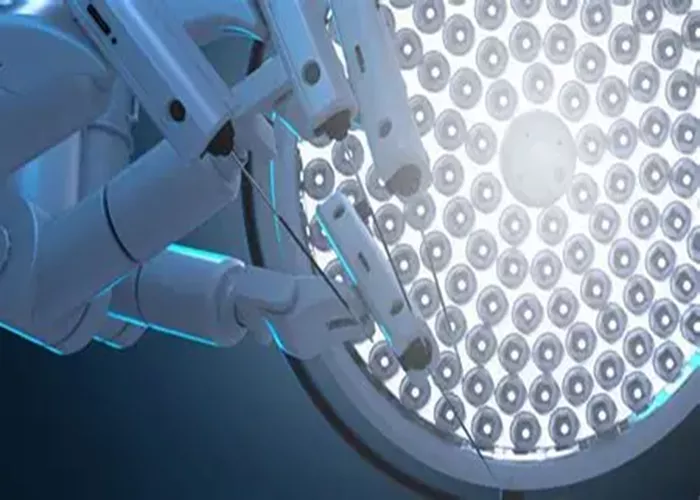
A smart robot trained on surgical videos has successfully completed a lengthy gallbladder removal without human assistance, acing even unexpected scenarios with skill comparable to seasoned surgeons. The feat, reported in the July 9 issue of Science Robotics, is hailed as a revolutionary advance in surgical robotics, as the robot for the first time combines mechanical precision with human-like adaptability and understanding.
“This progress moves it from a robot that merely ‘executes’ tasks to an intelligent system that truly ‘understands’ surgery,” said medical robotics expert Axel Krieger. “It’s a critical step toward developing autonomous surgical systems that work in messy, unpredictable real-world settings.”
In 2022, the team’s STAR robot performed the first autonomous laparoscopic surgery on pigs, but it relied on specially marked tissues and followed pre-set plans in highly controlled environments. The new system, SRT-H, is far more flexible and intelligent: it adapts in real time to individual anatomy, makes on-the-spot decisions, and corrects itself when operations go off-track. Built on the same machine learning framework as ChatGPT, it interacts via voice commands (“Grasp the gallbladder head”) and feedback (“Move the left arm slightly left”), continuously learning from these interactions to improve.
Gallbladder removal, a complex 17-step procedure requiring precise identification of bile ducts and arteries, clamping, and tissue cutting, was completed by the trained robot with 100% success. Though slightly slower than human surgeons, its results matched theirs. Notably, it stayed steady under non-standard conditions—such as altered starting positions or simulated blood obscuring vision.
The team calls SRT-H a major leap, solving key hurdles in deploying autonomous surgical robots in real-world settings. Unlike predecessors like STAR, which depended on specific environments and paths, SRT-H is the first to autonomously handle delicate surgeries in complex, dynamic conditions—shifting from “task execution” to “surgical understanding.” Its stability amid non-standard anatomy and disruptions paves the way for clinical use, potentially easing surgeon shortages and boosting medical access in remote or extreme environments.
Related topics:
New Review Downplays Antidepressant Withdrawal Risks in Long-Term Users
