
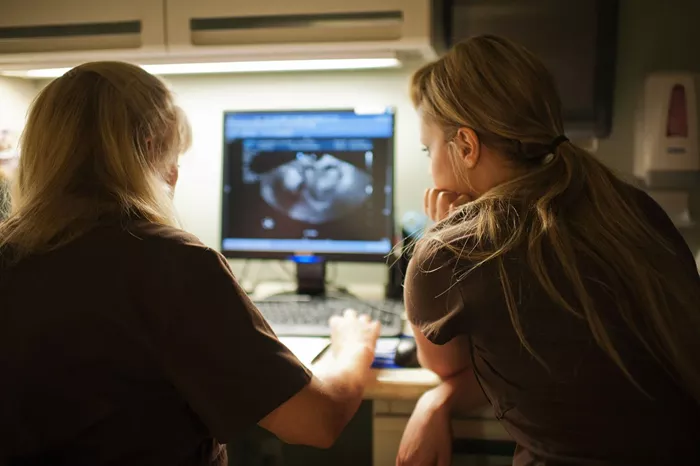
One of the largest support groups for crisis pregnancy centers (CPCs) in the U.S. has advised its member clinics to refrain from performing prenatal ultrasounds on women suspected of having ectopic pregnancies. This cautionary guidance emerged during a recent legal training session for faith-based nonprofits, recordings of which were obtained by NBC News.
The National Institute of Family and Life Advocates (NIFLA), which offers legal counsel and medical training to CPCs, described ectopic pregnancy as “the greatest medical and legal risk for clinics.” The organization emphasized that ruling out an ectopic pregnancy without proper testing is not feasible. According to NIFLA, only a blood test measuring the hormone human chorionic gonadotropin (HCG) can confirm such a diagnosis.
This guidance follows a 2023 lawsuit against Clearway Clinic, a Massachusetts crisis pregnancy center accused of misdiagnosing an ectopic pregnancy. The plaintiff alleged that inadequate medical care during an ultrasound led to a ruptured fallopian tube, causing life-threatening internal bleeding and emergency surgery. Clearway Clinic later settled the case without admitting fault.
Crisis pregnancy centers operate nationwide, often near abortion clinics, with the goal of persuading pregnant women to continue their pregnancies. While they offer some limited services such as pregnancy tests and ultrasounds, CPCs generally do not provide comprehensive prenatal care, gynecological services, or abortion-related care.
Experts note that many CPCs advertise free ultrasounds as a way to detect ectopic pregnancies and attract clients. Andrea Swartzendruber, a reproductive health epidemiologist, says these centers “use ectopic pregnancy concerns to motivate women to come in for scans.” However, NIFLA’s recent stance urges caution and advises against scanning women with suspected ectopic pregnancies, recommending immediate referral to emergency medical providers instead.
An ectopic pregnancy occurs when a fertilized egg implants outside the uterus, most commonly in a fallopian tube. Though rare, affecting 1% to 2% of pregnancies, it poses serious health risks and can be life-threatening if untreated. Symptoms may be mild or unnoticed in early stages, making early and accurate diagnosis essential.
Legal and medical experts at the NIFLA meeting also discussed federal privacy laws. While some CPCs claim compliance with the Health Insurance Portability and Accountability Act (HIPAA), many are staffed by volunteers and not legally required to follow these regulations. This discrepancy raises concerns about patient privacy and misinformation.
Advocates warn that CPCs, driven by religious beliefs, often do not provide full, evidence-based medical information or options, potentially endangering women’s health. A paper from the American Medical Association Journal of Ethics highlights that these centers prioritize ideology over patient well-being.
NIFLA also expressed opposition to state legislation aimed at tightening licensing requirements for ultrasound providers at CPCs. Some states, like Indiana and New Jersey, have proposed laws requiring ultrasounds to be performed only by licensed professionals. These bills aim to prevent misdiagnoses like the one that led to tragedy in Indiana, where a woman lost a fallopian tube and future fertility after an ectopic pregnancy was missed at a CPC.
Indiana state representative Maureen Bauer, sponsor of the bill, stated the law is intended to ensure safe and accurate care to avoid similar cases in the future.
Related topics:
