
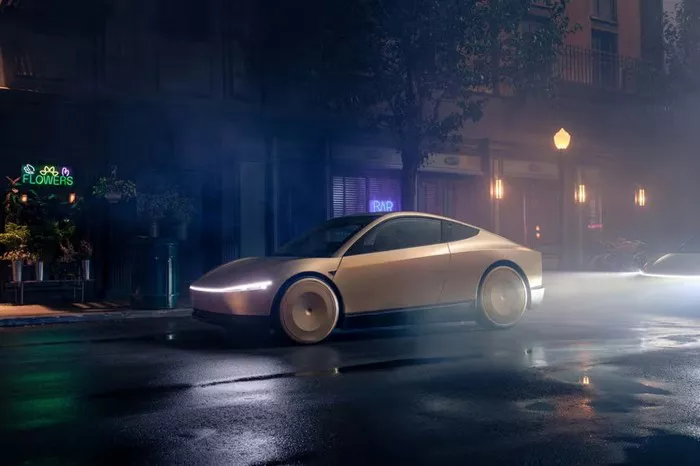
Tesla has officially commenced production of its long-anticipated Cybercab robotaxi, marking a significant milestone that could redefine urban mobility while accelerating transformation across the Vehicle Insurance sector. Chief executive Elon Musk confirmed during the company’s first-quarter 2026 earnings call that initial units are already being built at Tesla’s Texas facility.
The Cybercab is designed as a fully autonomous, two-seat vehicle that eliminates traditional driving controls, including the steering wheel and pedals. By removing the human driver entirely, Tesla is directly challenging the foundational assumptions behind today’s Vehicle Insurance frameworks, particularly those tied to ridesharing platforms.
Current rideshare models rely on layered and often complex insurance arrangements. Companies such as Uber and Lyft typically work with multiple insurers, with coverage varying based on geography, contractual agreements, and the driver’s activity status. Drivers are also required to maintain personal auto insurance, frequently supplemented with rideshare endorsements from providers like Progressive, State Farm, and Allstate to address potential gaps.
Insurance coverage in this system is divided into distinct phases, including periods when drivers are offline, waiting for a ride request, en route to pick up passengers, or actively transporting them. Each stage may trigger different policies and liability structures, reflecting a risk model centered on human behavior behind the wheel.
Tesla’s Cybercab disrupts this paradigm by shifting risk away from individual drivers and toward the vehicle itself. Insurers will instead need to assess factors such as autonomous software reliability, hardware performance, and the liability exposure of fleet operators. This transition points to a growing emphasis on product liability and commercial fleet insurance, reducing dependence on personal policies associated with gig economy drivers.
For insurers heavily involved in the rideshare ecosystem, this evolution represents a significant recalibration of risk exposure. Tesla has indicated that the Cybercab is engineered to comply with existing U.S. safety regulations, which could enable faster deployment compared with competitors such as Waymo and Cruise, both of which have encountered tighter operational restrictions. Rapid scaling by Tesla could accelerate the pace at which insurance models are forced to adapt.
The implications extend beyond insurance to the broader labor market. Rideshare platforms currently depend on large networks of independent drivers, particularly in densely populated urban areas. The expansion of autonomous fleets could gradually reduce that reliance, potentially lowering demand for personal auto insurance, rideshare add-ons, and hybrid coverage models.
At the same time, new areas of demand are likely to emerge. Insurers may see increased need for fleet-level policies, product liability coverage, and protection against cyber risks tied to connected and autonomous systems. However, the transition is expected to be gradual. Tesla has yet to achieve fully unsupervised autonomy at scale, and existing systems still require monitoring, with performance limitations in certain real-world scenarios.
This creates a transitional period defined by mixed fleets of human-driven and autonomous vehicles, introducing overlapping and sometimes conflicting risk profiles. For insurers, navigating this phase may prove particularly challenging as traditional Vehicle Insurance structures converge with emerging, technology-driven models.
Tesla’s Cybercab represents more than a new addition to its product lineup. It signals a fundamental shift in how mobility—and the risks associated with it—are understood. As autonomous technology advances, the Vehicle Insurance industry faces mounting pressure to evolve from a model built around human drivers to one increasingly defined by software, systems, and fleet operations.
