
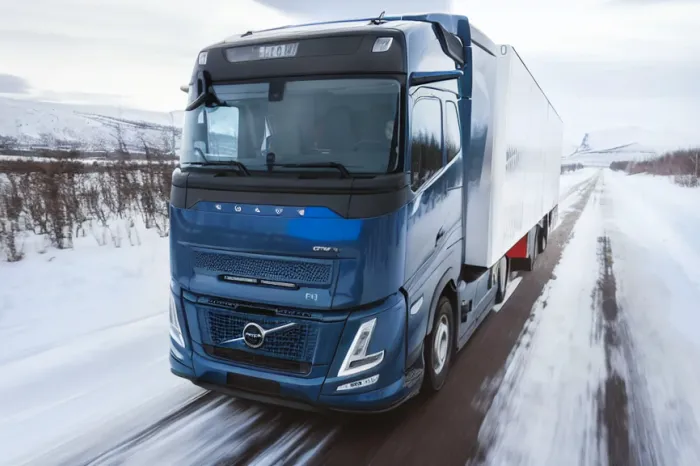
Volvo Trucks has started on-road testing of heavy-duty trucks powered by hydrogen combustion engines, signaling a major step forward in the company’s mission to provide cleaner transportation options. These new trucks are designed to deliver diesel-like power and performance while reducing carbon dioxide emissions, making them a promising alternative for long-distance freight operations.
The hydrogen trucks utilize an advanced technology called High Pressure Direct Injection (HPDI), which injects a small amount of ignition fuel at high pressure to start the combustion process before hydrogen is added. This method improves energy efficiency, reduces fuel consumption, and increases engine power compared to traditional hydrogen combustion engines. Volvo has successfully used HPDI technology in over 10,000 natural gas-powered trucks worldwide, providing a strong foundation for this hydrogen application.
According to Volvo, these hydrogen-powered trucks offer similar torque, drivability, and operational range as conventional diesel vehicles. This makes them particularly suitable for routes where battery-electric trucks face challenges due to limited charging infrastructure or long recharging times. When fueled by green hydrogen and renewable ignition fuels like Hydrotreated Vegetable Oil (HVO), the trucks have the potential to achieve net-zero carbon emissions on a well-to-wheel basis.
Volvo’s hydrogen truck program is part of its broader three-path strategy to reach net-zero emissions. This includes battery-electric trucks for shorter routes, fuel cell electric trucks, and combustion engines running on renewable fuels such as biogas and HVO. By offering multiple technologies, Volvo aims to provide fleet operators with flexible solutions tailored to different operational needs and regional energy availability.
The company plans to launch the hydrogen combustion engine trucks commercially in Europe before 2030. However, wider adoption will depend on factors like regulatory support, the expansion of hydrogen fueling infrastructure, and competitive pricing of hydrogen fuel. While North American market entry has not been confirmed yet, Volvo continues to monitor infrastructure developments and policy changes that could influence future deployment.
Jan Hjelmgren, head of product management at Volvo Trucks, emphasized the importance of this testing phase: “On-road testing is a key milestone for our hydrogen combustion engine trucks. We are confident they will lead the industry in fuel efficiency, power, torque, and drivability. Customers will be able to operate these trucks just like diesel vehicles.”
With global efforts intensifying to reduce greenhouse gas emissions from transport, Volvo’s investment in hydrogen combustion technology reflects a growing recognition that multiple solutions are needed. Hydrogen-powered internal combustion engines offer a lower-cost alternative to fuel cell systems while maintaining strong performance and payload capacity.
As countries develop clearer regulations and expand their green energy infrastructure, Volvo’s hydrogen trucks could become an important tool in decarbonizing heavy transport sectors. Their ability to combine familiar diesel-like operation with significant emission reductions positions them as a viable option for fleets aiming to meet stricter environmental targets without sacrificing efficiency or range.
