
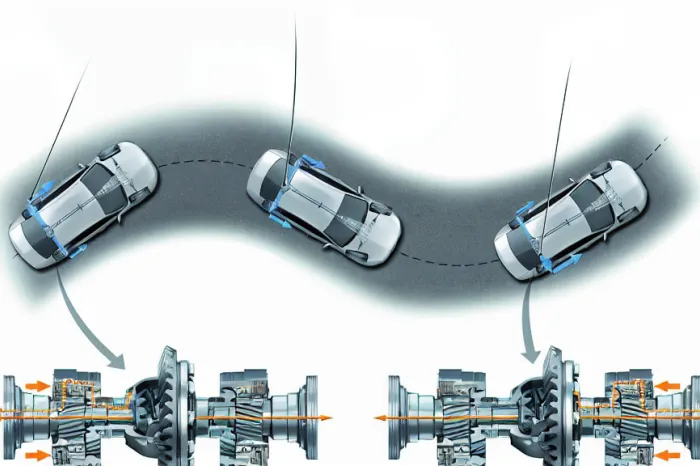
Audi has introduced a groundbreaking technology in its latest RS 5 model, marking a world-first achievement in the automotive industry. The new RS 5 features an electromechanical torque vectoring system at the rear axle, known as quattro with Dynamic Torque Control. This advanced system is integrated into a modular plug-in hybrid drivetrain, capable of distributing torque differences of up to 2,000 Nm between the rear wheels in just 15 milliseconds. This rapid and precise torque distribution operates independently of the drivetrain load, providing enhanced vehicle stability and agility.
The rear transaxle of the RS 5 is specifically designed for its hybrid drive system. It houses a water-cooled 400-volt permanent-magnet electric motor that delivers 8 kW of power and 40 Nm of torque. Acting as a high-voltage actuator, this motor works together with overdrive gears and a conventional differential with a low lock percentage to direct torque precisely to individual rear wheels. Unlike traditional clutch-based torque splitters, this electromechanical system functions effectively even when the throttle is off or under braking conditions, expanding its operational capabilities.
Audi manages this sophisticated system through the HCP1 High-Performance Computing Platform, which serves as the central control unit for both drivetrain and suspension functions. The platform integrates multiple inputs such as steering commands, vehicle dynamics data, and environmental conditions to coordinate real-time torque distribution. This ensures that the RS 5 maintains optimal handling characteristics across various driving scenarios.
In addition to the torque vectoring system, the RS 5 includes a front-axle electronic differential lock, brake torque vectoring, and twin-valve adaptive shock absorbers specifically tuned to complement the rear system. Drivers can select from multiple Audi drive select modes that range from neutral and balanced settings to rear-biased configurations, allowing customization of driving dynamics according to personal preferences or road conditions.
This innovation represents Audi’s commitment to enhancing driving performance through cutting-edge technology. The electromechanical torque vectoring system not only improves handling precision but also contributes to the hybrid drivetrain’s overall efficiency. Industry experts have noted that such advancements position Audi at the forefront of automotive engineering.
Beyond technical upgrades, Audi continues to engage with its customer base through new retail initiatives like the ‘After Dark’ dealer events aimed at promoting refreshed models such as the retooled Q3. These efforts highlight Audi’s focus on combining technological innovation with enhanced customer experience.
As Audi pushes forward with these technological improvements and customer engagement strategies, it solidifies its reputation for producing vehicles that blend performance, efficiency, and driver enjoyment. The new RS 5 stands as a testament to Audi’s ongoing pursuit of excellence in automotive design and engineering.
