
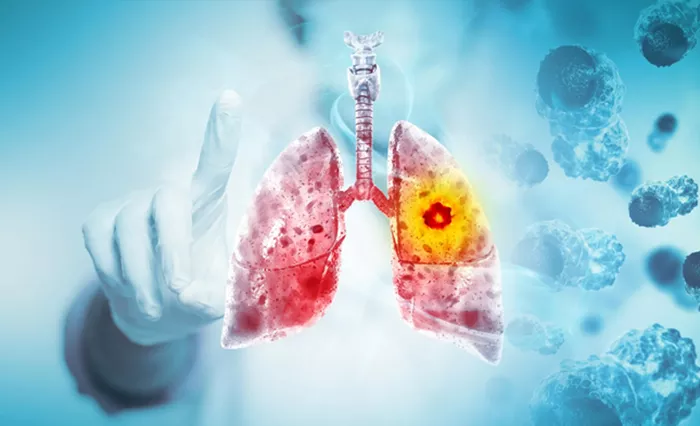
Researchers studying lung cancer have identified a new way that tumors survive treatment, offering a potential path toward more effective therapies. The findings focus on non-small cell lung cancer, the most common form of the disease. Scientists discovered that tumor cells can activate a backup survival system when one of their key cellular processes is blocked.
For years, doctors have attempted to slow tumor growth by targeting lysosomes. Lysosomes are small structures inside cells that act as recycling centers, breaking down waste and helping maintain cell balance. By interfering with lysosomes, researchers hoped to disrupt the survival of cancer cells. One drug often used for this purpose is chloroquine. However, the results of this strategy have often been limited because tumors adapt to the treatment.
The new study shows that when lysosomes are blocked, lung cancer cells activate a protein called SREBP-1. This protein allows tumors to absorb more glucose from their surroundings. The extra glucose provides energy that helps the cancer cells survive and continue growing despite treatment. In effect, the tumor activates a metabolic backup plan that allows it to resist therapy.
Scientists explained that this discovery reveals a previously unknown survival mechanism used by tumors. By increasing their intake of glucose and altering lipid metabolism, cancer cells create a self-reinforcing metabolic cycle that helps them endure treatment pressure. This ability to switch energy sources highlights the adaptability of tumors and explains why single-target therapies sometimes fail.
To test a new strategy, researchers used laboratory cell models and animal studies. They blocked glucose transport at the same time as lysosomal activity. When both processes were interrupted, tumor cells were unable to compensate. As a result, the cells developed severe mitochondrial damage, which disrupted their energy production and ultimately led to cell death.
The research team said the discovery could guide future treatment strategies for lung cancer. Because the approach attacks two metabolic pathways at once, it may prevent tumors from activating the kind of backup system identified in the study. This dual-target method could significantly increase the effectiveness of existing therapies.
Another important advantage is that several of the drugs involved in the study are already approved for other medical uses. Medications such as chloroquine and simvastatin have long clinical histories, which could help speed up the process of testing combination therapies for lung cancer patients. Researchers believe this may provide a practical route to developing improved treatments for people with limited therapeutic options.
Experts involved in the study said the findings offer clear guidance for designing new drug combinations. By targeting lysosomal function along with glucose and lipid metabolism, doctors may be able to greatly strengthen anti-tumor effects. The researchers also noted that the same metabolic strategy might apply to other cancers that rely heavily on glucose and lipid energy pathways.
