
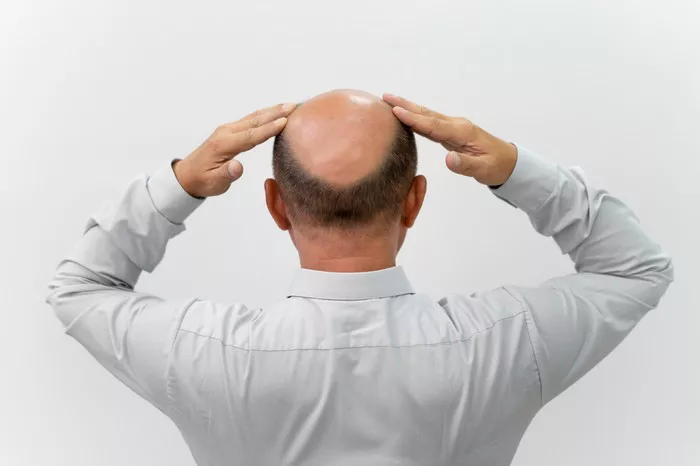
Researchers are exploring whether an ancient medicinal root used in traditional Chinese medicine could play a role in addressing hair loss, offering a possible alternative pathway before patients turn to surgical hair transplantation.
A recent study published in the Journal of Holistic Integrative Pharmacy examined Polygonum multiflorum, commonly known as He Shou Wu, and its potential effects on the biological mechanisms linked to androgenetic alopecia, the most common form of hair loss. According to the research, compounds found in the herb may influence several processes involved in hair follicle health, including reducing the activity of the hormone dihydrotestosterone (DHT), protecting follicle cells, stimulating growth pathways, and improving blood circulation in the scalp.
Understanding the science behind hair loss
Androgenetic alopecia affects millions of people worldwide and is often characterized by thinning hair on the crown and temples. The condition typically develops gradually as hair follicles shrink over time, producing strands that become thinner and shorter until visible bald patches begin to appear.
This process is closely associated with DHT, a hormone derived from testosterone. Elevated sensitivity to DHT can lead to the progressive miniaturization of hair follicles, shortening the hair’s growth cycle and reducing the diameter of individual strands.
Within the hair growth cycle, the anagen phase represents the period of active growth. Researchers believe that extending this phase while reducing biological stressors on follicles may help maintain thicker and healthier hair.
An ancient remedy revisited in modern research
He Shou Wu has been used in East Asian traditional medicine for more than a thousand years and is often associated with formulas intended to promote vitality and longevity. While historical use does not prove medical effectiveness, it has encouraged scientists to investigate the plant’s bioactive compounds.
According to the study, the root contains several antioxidant molecules, including emodin and tetrahydroxystilbene glucoside (TSG). These compounds may help reduce oxidative stress and influence cellular pathways within the scalp environment where hair follicles develop and regenerate.
Researchers suggest that improving this microenvironment could support healthier follicle activity and potentially slow or reverse some aspects of hair thinning.
A “multi-target” approach to follicle health
Scientists affiliated with Guangdong Pharmaceutical University reported that Polygonum multiflorum may act on multiple biological mechanisms simultaneously. The study describes several potential actions, including:
- Reducing the biological impact of DHT
- Protecting follicle cells from premature death
- Activating molecular pathways associated with hair growth
- Enhancing blood circulation in scalp tissue
This multi-target strategy differs from many existing treatments that focus primarily on a single mechanism.
If confirmed through further research, the combination of these effects could theoretically extend the hair growth phase and support the regrowth of stronger strands in some individuals. However, researchers emphasize that these findings remain preliminary.
How it compares with common hair loss treatments
Current medical treatments for androgenetic alopecia typically include finasteride, which reduces DHT levels, and minoxidil, which promotes blood flow and stimulates hair follicles. Hair transplantation is often considered when medical therapies fail to produce satisfactory results.
The study notes that the herbal approach may address multiple biological pathways at once, rather than targeting a single stage of the hair loss process. However, experts caution that such comparisons remain theoretical until stronger clinical evidence is available.
Interest in alternative approaches continues to grow because androgenetic alopecia is both widespread and emotionally impactful. Many patients seek treatments that offer longer-term solutions with fewer side effects.
Early-stage research and safety considerations
Despite the promising findings, researchers stress that the work remains largely in the experimental stage. Much of the available data comes from laboratory studies, historical medical records, and preliminary clinical observations rather than large-scale human trials.
Another important factor is safety. Improper use of Polygonum multiflorum has been associated with potential liver toxicity, particularly when consumed without proper preparation or dosage control.
For this reason, scientists emphasize that self-medication with the herb is not recommended. Determining safe and effective dosages will require controlled clinical trials and regulatory evaluation.
A developing field of research
While the study does not suggest that hair transplantation will become obsolete, it highlights a growing scientific effort to better understand the biological processes behind hair thinning.
By targeting the underlying mechanisms—such as DHT activity, follicle health, and scalp circulation—researchers hope to expand treatment options for individuals experiencing androgenetic alopecia.
For now, He Shou Wu represents a promising but still experimental avenue, with experts emphasizing that additional human trials and safety studies are needed before it could become a widely recommended treatment.
