
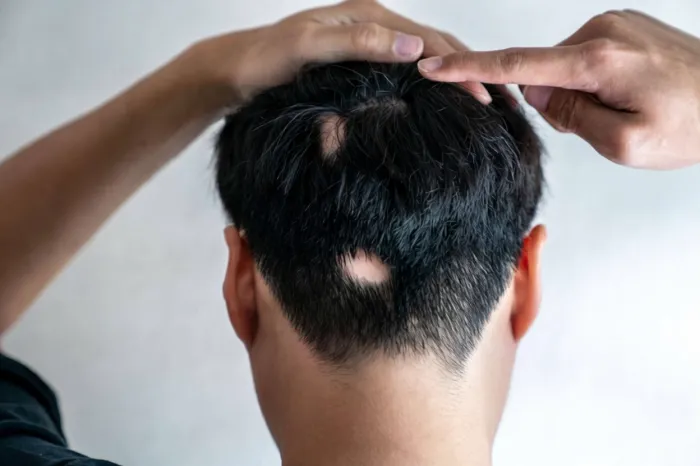
Alopecia, an autoimmune condition that causes hair loss, is becoming more widely discussed as both public figures and everyday people come forward with their stories. The condition occurs when the immune system mistakenly attacks hair follicles, which may lead to patchy hair loss (known as alopecia areata) or even total baldness (alopecia universalis). While hair loss usually starts on the scalp, it can also occur on the face and other body parts.
One celebrity recently in the spotlight because of alopecia is NASCAR champion Joey Logano, who has spoken openly about his journey. After years of trying various hair growth treatments and living with repeated flare-ups, Logano decided to embrace a bald look, even joking about his new “hair-o-dynamic” style. He has said that going bald is now “very refreshing” and that his family supported his decision.
Alopecia has affected many other well-known personalities. Jada Pinkett Smith revealed her experience with the condition in 2018 and brought attention to it again after an incident at the 2022 Oscars. She started conversations about the emotional and social impact of hair loss, especially among women and people in the public eye. Other celebrities who have spoken about their struggles include Robert Pattinson, Tyra Banks, Keira Knightley, Viola Davis, and Ashley Tisdale.
The effects of alopecia go beyond physical appearance. For many, hair loss leads to challenges with self-esteem and confidence. Some have shared that the unpredictable nature of alopecia—where patches come and go—makes the experience harder. In severe cases, it has had psychological impacts, and stories have been shared about bullying and mental health struggles connected to visible hair loss.
Treatments for alopecia vary, but none are guaranteed. Options include topical creams, steroid injections, oral medications, and even light therapy. Some people also try alternative practices such as aromatherapy or acupuncture. In some cases, dietary changes may help lessen symptoms by reducing inflammation. Experts note that while alopecia is common—affecting over five million people in the US—it is rarely permanent, and hair may grow back depending on the underlying cause. As more people open up about living with alopecia, the conversation is helping to reduce stigma and raise awareness of the reality and hopes for those affected by the condition.
