
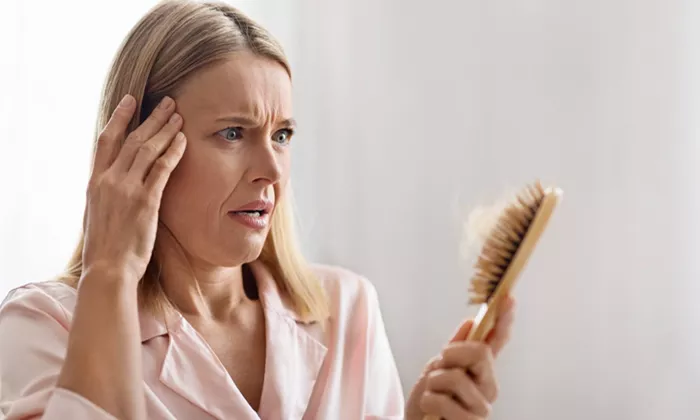
As millions of women across the United States battle female pattern hair loss, the search for effective treatments continues. While options like finasteride and minoxidil have proven effective, not all women feel comfortable using these prescription treatments. Alternative remedies, including herbal solutions, are gaining attention—but until now, scientific backing has been limited. However, a recent review published in the Journal of Holistic Integrative Pharmacy may change that narrative.
The study highlights Polygonum multiflorum, a medicinal herb used for centuries in Traditional Chinese Medicine, as a potential aid for androgenic alopecia, also known as male and female pattern hair loss. The findings have sparked interest among dermatologists, although they caution that further research is necessary.
What Is Polygonum Multiflorum?
Polygonum multiflorum, also known as fo-ti, has long been revered for its purported benefits in enhancing hair growth and restoring natural hair color. This root extract has traditionally been used to darken hair and promote its fullness. According to the recent scientific review, the herb operates through multiple pathways to nourish hair and protect follicle cells from damage. One significant way it works is by blocking dihydrotestosterone (DHT), a hormone that contributes to the shrinking of hair follicles.
Additionally, the herb is believed to stimulate hair regrowth by activating signals that promote follicular health. It may even improve blood flow to the scalp, ensuring that hair follicles receive the necessary nutrients to support growth and fullness.
Scientific Insights and Dermatological Opinions
Cindy Wassef, MD, a dermatologist at Premier Health Associates in Randolph, NJ, emphasizes that the herb’s potential benefits for hair health are supported by a growing body of research. “Recent lab studies have shown that Polygonum multiflorum can elongate the hair growth cycle,” says Dr. Wassef.
However, Dr. Wassef and other experts, including Cynthia Bailey, MD, caution that while preliminary research is promising, the exact mechanisms behind Polygonum multiflorum’s effects remain unclear. Dr. Bailey adds, “We don’t entirely know why hair follicles transition to gray or why hair production slows, so it’s difficult to prove Polygonum multiflorum’s role in reversing these processes.”
How Is It Used?
Polygonum multiflorum is available in various forms, including topical applications such as crushed powder, tonics, and even teas. Some facial creams and cosmetics also contain the herb. When applied topically, Polygonum multiflorum appears to be safer, with fewer concerns about toxicity. However, when ingested orally, there are notable concerns regarding its safety, particularly with regard to potential toxic effects.
Dermatologists suggest caution, as the herb’s concentration can vary between products, and its safety and effectiveness for treating hair loss are not yet fully understood.
What Experts Recommend for Hair Loss
While the research surrounding Polygonum multiflorum is intriguing, dermatologists advise waiting for more definitive studies before relying on it as a treatment for androgenic alopecia. Dr. Wassef highlights that “there is no clear consensus on how much of the herb is needed for optimal results, and its safety for ingestion remains uncertain.” For now, experts recommend sticking to more established treatments, especially those that have undergone extensive clinical testing.
Until further data is available, those experiencing hair thinning should consult with a dermatologist to explore safe, evidence-backed options.
