
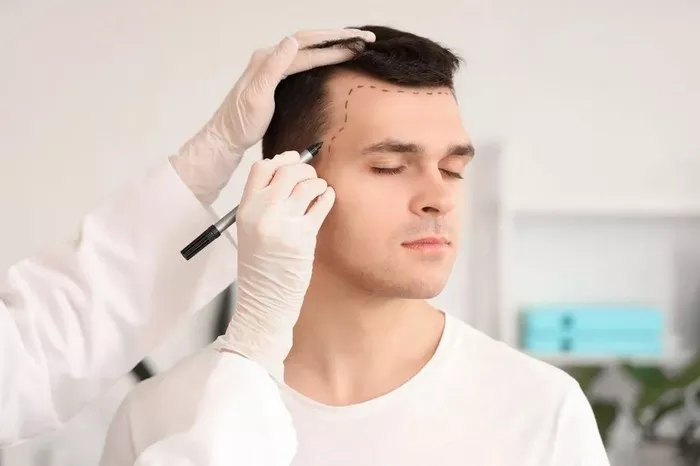
Amid a surge in complaints over botched hair transplant procedures, the central government is preparing to reclassify hair transplantation from a “cosmetic salon” service to a tightly regulated “surgical practice,” according to three government officials and documents reviewed by Mint. The move aims to curb malpractice in an industry currently valued at about $252 million.
The proposed reclassification draws a sharp distinction between non-invasive salon services, such as hair styling, and invasive medical procedures. Hair transplantation involves surgical extraction and implantation of follicles, often under anaesthesia, and requires sterile conditions, emergency preparedness, and specialized medical expertise.
Drafted by the National Council for Clinical Establishments (NCCE)—the statutory body responsible for setting healthcare quality and safety standards—the Minimum Standards for Hair Transplant Centres specify that only qualified medical professionals may perform these procedures. Under the draft norms, hair transplants would be restricted to dermatologists and plastic surgeons holding recognized medical degrees.
“The new rules are intended to eliminate ghost clinics by clearly stating that only medically qualified professionals—specifically dermatologists and plastic surgeons—can perform hair transplants,” said one government official, speaking on condition of anonymity. “Despite being marketed as a simple cosmetic service, hair transplantation is a surgical procedure involving anaesthesia and carries risks such as severe infection and medical shock.”
The regulatory push follows a May 2022 order by the Delhi high court, which ruled that hair transplantation qualifies as aesthetic surgery and must be carried out by qualified dermatologists or trained surgeons with the patient’s informed consent. However, the Ministry of Health and Family Welfare (MoHFW) is expected to notify the final rules only after the Madras high court delivers its judgment in a related case.
A regulatory grey area
India’s hair transplant industry is projected to grow sharply—from $252 million to $1.7 billion by 2033—according to market research firm IMARC Group. Major players include DHI India, Eugenix Hair Sciences, Dr. Batra’s, Kaya Skin Clinic, and VLCC.
Advanced techniques such as Follicular Unit Extraction (FUE) and Direct Hair Implantation (DHI) dominate the market, with men accounting for nearly 79.5% of industry revenue, according to Mordor Intelligence.
Despite its rapid growth, the sector has raised serious safety concerns. Around 350,000 hair transplant procedures are performed annually in India, and at least six patient deaths have been reported since 2016. Documented causes include anaesthesia overdose, anaphylactic shock, sepsis linked to unhygienic conditions, and tissue necrosis.
“Many low-cost centres lack essential emergency equipment and trained medical staff,” said a second government official. “By bringing these facilities under strict medical regulation, the government aims to ensure that clinics can manage complications and reduce risks to patients’ lives.”
Legal and professional pushback
Discussions on minimum standards for hair transplant centres were held during the 16th meeting of the NCCE on 9 September 2025, chaired by Director General of Health Services Dr Sunita Sharma.
Meeting minutes reviewed by Mint state that the Delhi high court had directed the MoHFW to frame national-level medical protocols for hair transplant centres following a death caused by a faulty procedure performed by a technician. In compliance with this directive, the NCCE finalized the minimum standards.
However, professional bodies have raised objections. The Indian Association of Aesthetic Plastic Surgeons (IAAPS) submitted a representation opposing the inclusion of MDS (maxillofacial surgeons) as eligible practitioners. Meanwhile, the Tamil Nadu branch of the Indian Association of Dermatologists, Venereologists and Leprologists (IADVL) has filed writ petitions in the Madras high court challenging Dental Council of India guidelines issued in December 2022 that permit oral and maxillofacial surgeons to perform hair transplants.
Although the standards are finalized, the NCCE has decided to withhold notification until the Madras high court issues its ruling, one official said.
“A hair transplant is not a beauty salon service—it is a medical procedure,” said a third government official. “The real problem in India is that the practice has been dangerously trivialized. In most countries, these procedures are tightly regulated, with legal safeguards that prevent the kinds of tragic incidents we have seen here.”
