
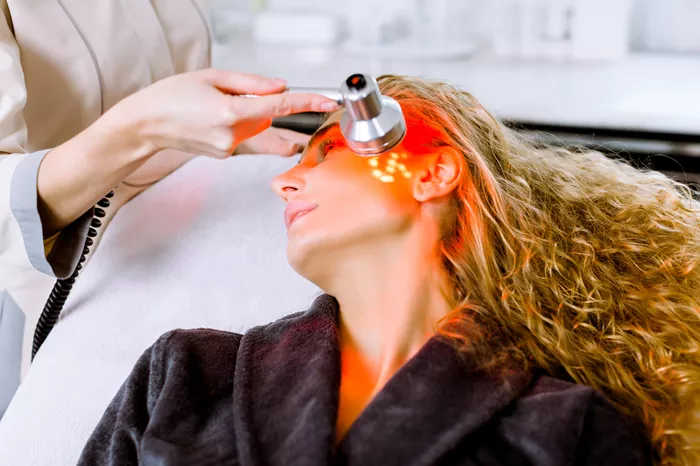
After enduring more than 20 years of surgeries, medications, and debilitating symptoms, a Colorado mother has discovered a treatment that significantly eased her autoimmune condition and chronic pain: medical-grade red light therapy, also known as photobiomodulation.
Expert Spotlight
Tess Peterson, owner of Light Lounge in Arvada, Colorado, specializes in photobiomodulation therapy. After experiencing her own health improvements with red light therapy, she opened her franchise in 2021 to make the treatment more accessible to others.
What is Photobiomodulation?
Photobiomodulation uses specific wavelengths of red and near-infrared light to trigger cellular changes in the body. The therapy is backed by thousands of clinical studies and is FDA-cleared for certain uses, including temporary pain relief and hair regrowth.
“Red light has been used for a variety of health and beauty concerns that harness photobiomodulation, or the use of light to alter biology,” note experts from Stanford University. Research suggests potential benefits for chronic pain conditions such as osteoarthritis, fibromyalgia, and temporomandibular disorders (TMJ).
A Personal Journey to Relief
In December 2020, Tess Peterson was facing severe chronic pain following a car accident and a lupus flare. She was taking 11 different medications and struggling to function daily. “The fatigue was crushing, and I could barely be present with my kids,” Peterson recalls.
After learning about red light therapy from a friend, she began attending sessions five days a week. Within a few treatments, she experienced a dramatic improvement in mobility and a reduction in pain. “I turned my head to back out of a parking spot and realized I hadn’t been able to do that in years,” she said.
Clinical Insights and Research
Red light therapy works by stimulating mitochondria, the energy-producing structures in cells, enhancing their ability to repair and function efficiently. Unlike UV treatments, photobiomodulation does not carry a risk of skin cancer.
Recent studies reinforce its potential. A 2023 review in Bioengineering highlighted anti-inflammatory benefits for rheumatoid arthritis and osteoarthritis. In 2024, the FDA approved a light-based system using photobiomodulation to treat age-related macular degeneration, improving patients’ vision over two years.
Life-Changing Results
After four years of consistent therapy, Peterson has discontinued all 11 medications under medical supervision. She has not experienced another lupus flare, and the nerve damage in her arm has healed. “Every day I wake up without pain, able to play with my kids—I know where I’ve been, and I’m grateful I’m not there anymore,” she said.
While not everyone responds immediately, Peterson encourages commitment to regular treatments. She emphasizes that photobiomodulation is a lifestyle approach rather than a quick fix.
Expanding Access
Inspired by her personal success, Peterson opened her own Light Lounge franchise to help others with chronic conditions who have exhausted traditional medical options. She now works daily with clients who experience even small benefits, offering hope and relief to those living with long-term pain and autoimmune challenges.
Experts caution that while photobiomodulation shows promise, more clinical trials are needed. Patients should consult healthcare providers before starting any new therapy.
