
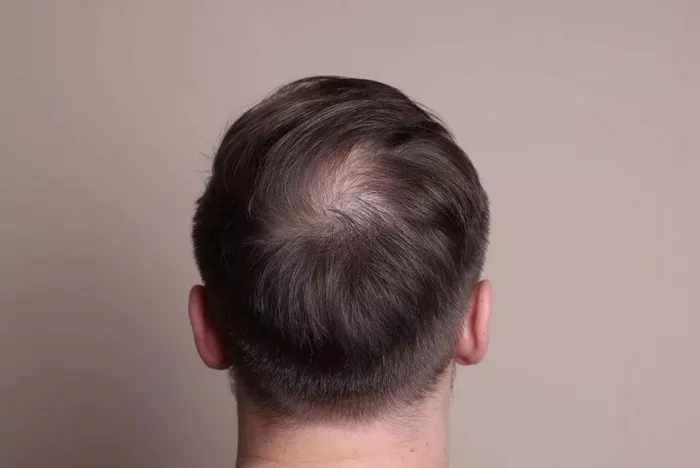
A team of scientists has reported promising early results for a daily scalp serum made with a tropical plant extract, finding it may stimulate hair regrowth and improve thickness within just eight weeks.
The findings come from a randomized, double-blind clinical trial involving 60 adults, conducted by researchers in Taipei. Participants applied one milliliter of the serum to their scalp each night for 56 days, while researchers tracked changes using standardized imaging and measurement tools.
According to the study, published as a preprint on medRxiv, participants using the full formulation experienced nearly a 25 percent increase in hair thickness compared with those receiving a placebo, a notable change over a relatively short period.
Faster signals than existing treatments
Male-pattern hair loss is widespread, and while treatments such as minoxidil and finasteride are clinically proven, they often require several months to show visible results and do not work uniformly for everyone. The speed of response observed in this small, tightly controlled trial has therefore attracted attention in hair-loss research circles.
The study was led by Dr. Tsong Min Chang of Schweitzer Biotech Company (SBC), whose team aimed to determine whether a multi-component topical formula could push more hair follicles into an active growth phase within weeks rather than months.
Unlike many over-the-counter hair serums that rely on loosely supported claims, the researchers emphasized the importance of a blinded, placebo-controlled design to isolate measurable biological effects.
What’s in the serum
The proprietary formula combines familiar cosmetic ingredients with more experimental biological signals. Alongside caffeine and panthenol—commonly used in shampoos for conditioning and scalp comfort—the serum contains extracellular vesicles derived from Centella asiatica, a tropical plant long used in cosmetic and dermatological products.
These vesicles act as microscopic carriers of cellular signals. The formulation also includes fibroblast growth factor 7 (FGF-7) and insulin-like growth factor 1 (IGF-1), both of which are known to influence hair follicle activity and the hair growth cycle in laboratory and animal studies.
Researchers say the ingredient selection was based on existing evidence linking these signals to follicle activation and maintenance, with careful formulation intended to support effective delivery to the scalp.
How the trial worked
Participants aged 18 to 60 were randomly assigned to one of five groups, including a placebo group. Four treatment arms tested increasingly complex formulations, starting with a basic serum and adding growth factors and plant-derived vesicles step by step, culminating in the full combination.
Hair density, strand thickness, length, and shedding were measured at two-week intervals using standardized tools. This stepwise design allowed researchers to observe how each component contributed to the overall effect.
Results at day 56
By the end of the eight-week period, the group receiving the full formulation showed the largest gains across most measures. Hair density in this group increased by nearly 25 percent compared with a much smaller change in the placebo group, while individual strands also became measurably thicker.
The researchers noted that improvements tended to rise as more components were added, suggesting a synergistic effect. They also proposed that the Centella asiatica–derived material may support overall scalp health, creating a more favorable environment for hair follicles.
Important limitations
Despite the encouraging results, the authors cautioned against overinterpretation. The trial was short relative to the full hair growth cycle, and participants were generally healthy adults rather than individuals with diagnosed pattern hair loss.
In addition, employees and consultants of the sponsoring company were involved in the research, a factor that underscores the need for independent replication. The study also did not directly compare the new serum with established treatments such as minoxidil or finasteride.
Placing the findings in context
Hair growth occurs in cycles, with therapies typically aiming to prolong the active growth, or anagen, phase. Growth factors such as IGF-1 and FGF-7 have been shown to influence this process in experimental settings, while Centella asiatica has demonstrated anti-inflammatory and skin-supporting properties in small human studies.
Caffeine and panthenol, though widely used, are generally thought to improve scalp condition and hair appearance rather than drive new follicle growth on their own.
What comes next
Researchers say larger, longer-term trials are needed, ideally enrolling patients with clinically diagnosed hair loss and directly comparing outcomes with existing therapies. Future studies should also track safety closely, given the biological activity of growth-related signals, and ensure consistency in manufacturing—particularly if plant-derived vesicles are central to the effect.
What it means for patients
For now, established treatments remain the standard of care, supported by years of clinical evidence and medical guidelines. Hair growth typically unfolds over months, and any gains usually require ongoing use to maintain.
The new data suggest the Centella asiatica–based serum may offer a measurable biological signal in a short, controlled study. While the findings are intriguing, experts agree they represent an early step—one that justifies further investigation rather than immediate changes to clinical practice.
