
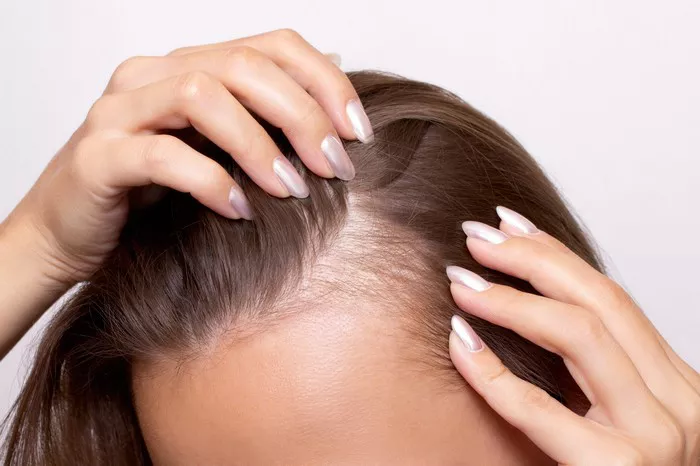
Sudden hair thinning is emerging as a growing concern among women in their late 20s and early 30s, challenging the long-held belief that hair loss predominantly affects those in their 40s. Many women with naturally voluminous or curly hair notice their ponytails feeling lighter, thinner, and less substantial—a subtle yet alarming sign of early hair density loss.
“Thinning hair can result from lifestyle choices, genetics, diet, and underlying medical conditions,” explains Dr. Asima Mir, Aesthetic Specialist at Orskin, Dubai. “It affects both men and women and remains one of the most common causes of hair loss globally.”
Unlike hereditary hair loss, this newer wave of thinning often appears suddenly, typically following periods of stress, hormonal fluctuations, illness, or burnout. Beyond shedding, affected hair loses volume, strength, and resilience, refusing to hold shape despite volumizing shampoos or styling products. Most cases fall under androgenic alopecia, also known as female pattern hair loss.
Increasingly, women are seeking targeted interventions to restore hair density and strength. Polynucleotides (PNs)—previously used in aesthetic medicine for skincare—are now gaining attention in haircare for their potential to address hair loss at its root. Derived from purified fragments of salmon or trout DNA, PNs stimulate dormant follicles, enhance blood flow, and extend the growth (anagen) phase of hair, promoting thicker, healthier strands.
“PN hair growth treatments can restore density, volume, and hair strength,” Dr. Mir notes. “They are suitable for most individuals experiencing early hair thinning.”
Clinics may use the term PDRN (polydeoxyribonucleotide) in reference to these treatments, which are closely related to PNs. While all PDRNs are a type of polynucleotide, not all PNs are PDRN. PDRN is often used to repair and calm inflammation, whereas broader PN complexes may focus on hydrating the scalp, improving elasticity, and supporting regenerative activity.
Polynucleotide treatments are administered via micro-injections, mesotherapy, or in combination with microneedling, LED therapy, or low-level lasers. Sessions are quick, with minimal downtime. “These treatments harness the regenerative properties of PNs to improve scalp health, combat aging, and address conditions like alopecia, dryness, and sensitivity,” Dr. Mir explains.
While PNs are most effective when paired with nutritional optimization, hormonal assessment, stress management, and conventional hair therapies, they specifically target inflammation and DHT, encouraging the proliferation of hair follicle cells. When combined with other treatments such as PRF, they may offer longer-lasting results than traditional PRP or mesotherapy approaches.
Polynucleotide therapy is not a solution for advanced hair loss but excels as an early intervention strategy, acting as a “reset” rather than a rescue. For women confronting sudden hair thinning, PNs provide a proactive approach to maintaining density, volume, and strength.
