
From blow-drying hair immediately after a shower to straightening it before an evening out, hairstyling has become an essential part of daily grooming. While these routines seem harmless, repeated exposure to heat, chemicals, and tension can silently damage hair roots over time.
Dermatologist and Hair Restoration Expert Dr. Abhishek Pilani tells HT ShopNow, “Excessive hairstyling often manifests as thinning, limpness, or increased hair fall. Most people think hair loss is sudden, but in reality, follicle damage usually accumulates over months.”
How Styling Tools Weaken Hair Follicles
Heat-based styling tools—like straighteners, curlers, and blow-dryers—operate at temperatures hair isn’t naturally designed to handle. Dr. Pilani explains, “Although hair may appear polished after styling, repeated thermal exposure irritates the scalp around each follicle. Over time, this weakens the follicle’s grip, which explains why hair fall often seems sudden even though the damage is gradual.”
Chemical Treatments Can Increase Scalp Sensitivity
Chemical processes such as coloring, bleaching, keratin, and smoothening treatments restructure internal hair bonds but also disrupt the scalp’s natural barrier. According to Dr. Pilani, “Frequent chemical treatments inflame and sensitize the scalp. When treatments are applied too close together, follicle recovery slows, leading to thinner hair and slower regrowth.”
Daily Hairstyles and Tension Damage
Tight hairstyles like ponytails, buns, braids, or hair extensions apply constant traction to certain areas, particularly the temples and hairline. Dr. Pilani notes, “This repeated tension can shrink follicles and produce finer, weaker strands over time.”
Product Build-Up Can Suffocate Follicles
Styling products such as serums, sprays, dry shampoos, and setting agents can accumulate on the scalp, trapping dirt and sweat. “If follicles remain clogged, hair growth weakens, leaving strands flat and lifeless,” Dr. Pilani explains.
Restoring Root Strength
Most styling-related damage is reversible with consistent scalp care. Dr. Pilani recommends:
- Gentle exfoliation: Use a scalp cleanser once a week to remove build-up and restore follicle function.
- Targeted nutrients: Ingredients like peptides, niacinamide, caffeine, and biotin improve micro-circulation and nourish roots, gradually enhancing density and reducing breakage.
Professional Treatments for Accelerated Recovery
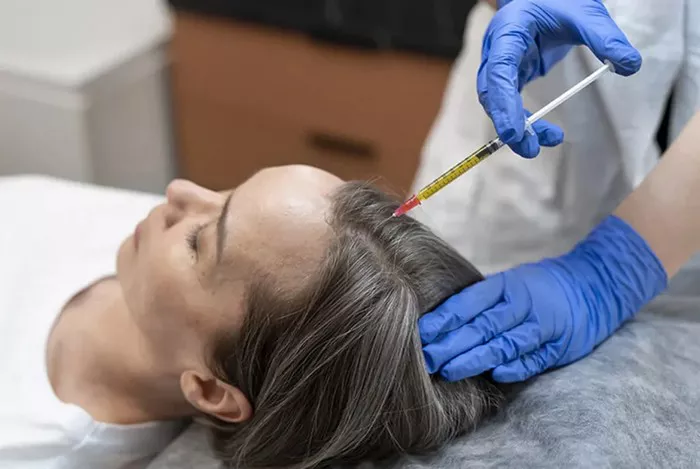
For more severe thinning, professional interventions can help. Dr. Pilani highlights therapies such as:
- PRP Therapy: Delivers growth factors to stimulate weakened follicles.
- Low-Level Laser Therapy: Boosts cellular activity for stronger regrowth.
- Hydration and Oxygenation Treatments: Reduce inflammation and improve scalp health.
These treatments work best when combined with a consistent at-home care routine.
Adopting Gentler Styling Habits
Lifestyle adjustments are equally important. Dr. Pilani advises:
- Lower heat settings on styling tools
- Air-drying hair when possible
- Spacing out chemical treatments
- Avoiding tight hairstyles
- Using heat-protectant sprays and bond-repair masks
Key Takeaway: Prioritize the Scalp
Strong, healthy hair begins with a well-nourished scalp. Styling remains a form of self-expression, but its effects are best enjoyed when paired with careful care and recovery. By treating the scalp as the foundation, hair becomes naturally shinier, thicker, and more resilient.
