
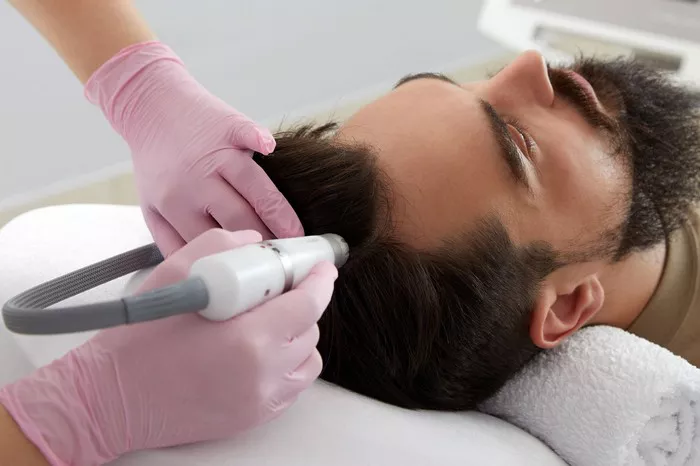
The Union Ministry of Health has clarified that Oral and Maxillofacial Surgeons (OMFS) trained under the Dental Council of India’s (DCI) MDS Course Regulations, 2017 are legally permitted to perform certain aesthetic surgical procedures, including select hair-restoration treatments, provided these are strictly limited to the cranio-maxillofacial region.
The clarification was given by Union Minister of State for Health and Family Welfare, Smt Anupriya Patel, in a written response to questions raised in the Rajya Sabha by Member of Parliament Shri Vivek K. Tankha. The MP sought to know whether the DCI allows OMFS specialists to carry out aesthetic dermatology procedures, whether such permissions exceed the statutory mandate of the DCI, and if they conflict with provisions of the National Medical Commission (NMC) Act, 2019.
He also questioned whether this overlap could pose regulatory or public safety concerns and whether the government intended to issue advisories or establish coordination mechanisms between the DCI and the NMC to address such issues.
Responding to these concerns, Minister Patel stated that OMFS specialists who complete postgraduate training under DCI-approved regulations receive comprehensive and recognized education that qualifies them to undertake aesthetic surgical procedures and limited hair-restoration work within their defined anatomical domain.
“OMFS specialists receive extensive training as part of their approved postgraduate curriculum. Their professional scope is distinct from that of dermatology and general medicine. Therefore, the regulatory mandates of the DCI and NMC are complementary rather than conflicting,” the Minister told the House.
She further emphasized that the government encourages coordination among statutory regulatory bodies to maintain regulatory clarity, ensure patient safety, and uphold the integrity of healthcare professions governed by respective authorities.
The clarification follows earlier statements by the Minister regarding concerns over unqualified or unregistered individuals performing aesthetic dermatology and laser treatments across the country. She had informed Parliament that the National Medical Commission (NMC) had not received any complaints indicating that such procedures were being carried out by unqualified or unregistered persons.
Minister Patel also referred to the NMC guidelines on Aesthetic Surgery and Hair Transplant Procedures, issued on September 20, 2022, which aim to promote ethical medical practices and safeguard patient safety. As previously reported by Medical Dialogues, these guidelines outline the qualifications required for medical professionals performing aesthetic and hair transplant procedures.
Under the NMC’s guidance, hair transplantation is preferably to be performed by specialists with formal surgical training, such as MCh/DNB Plastic Surgery or MD/DNB Dermatology, noting that hair transplantation forms a core part of their academic curriculum.
On aesthetic procedures more broadly, the Commission stated that such interventions should be undertaken only by Registered Medical Practitioners (RMPs) who have received adequate training as per their respective curricula. The NMC stressed that the curriculum of each specialty should serve as the guiding principle when deciding whether a practitioner is qualified to perform aesthetic or hair transplant procedures.
The Commission further cautioned that aesthetic procedures, including hair transplantation, can involve complications and require proper patient selection, accurate diagnosis, surgical expertise, and appropriate post-procedure care. Practitioners must also ensure they have sufficient infrastructure and trained personnel to manage potential adverse outcomes.
Importantly, the NMC clarified that aesthetic procedures are not emergency surgeries and rejected any justification for allowing untrained individuals to perform them under claims of “exceptional circumstances.”
The government’s latest clarification seeks to reinforce regulatory boundaries while underscoring patient safety and professional accountability in the rapidly expanding field of aesthetic medicine and surgery.
