
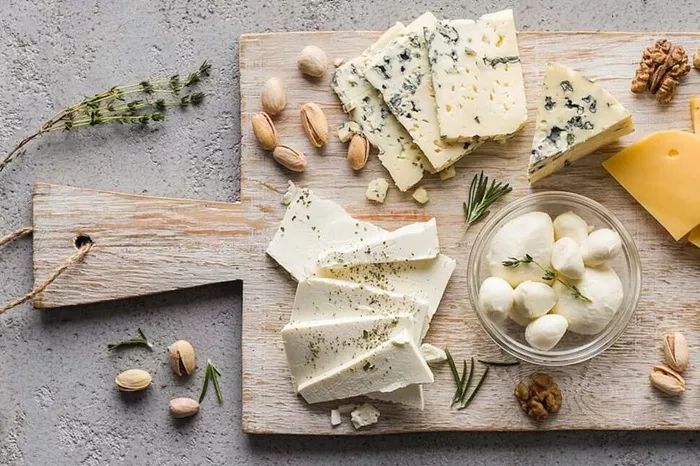
Cheese and cream might be more than just holiday indulgences—they could also support brain health.
A new study published Dec. 17 in Neurology suggests that eating high-fat cheese and cream may be linked to a lower risk of dementia.
“For decades, health advice has often labeled high-fat foods, including cheese, as something to limit,” said Emily Sonestedt, an associate professor of nutrition at Lund University in Sweden and senior researcher on the study. “Our findings show that some high-fat dairy products may actually protect against dementia, challenging long-held assumptions about fat and brain health.”
High-fat cheeses contain more than 20% fat and include cheddar, Brie, and Gouda. High-fat creams, like whipping cream and clotted cream, typically have 30% to 40% fat.
The study followed nearly 27,700 people in Sweden, averaging 58 years old, for 25 years. During that time, over 3,200 participants developed dementia. Researchers collected detailed information on participants’ diets, including weekly food diaries and interviews about food preparation.
Key findings include:
People who ate 50 grams or more of high-fat cheese daily—roughly two slices of cheddar—had a 13% lower risk of developing dementia compared to those who ate less than 15 grams a day.
High-fat cheese eaters also had a 29% lower risk of vascular dementia, caused by reduced blood flow to the brain.
Those without genetic risk factors for Alzheimer’s who ate more high-fat cheese had a 13% lower risk of the disease.
Participants who consumed 20 grams or more of high-fat cream daily—about 1.4 tablespoons—had a 16% lower risk of dementia.
The study did not find any link between dementia risk and low-fat cheese, low-fat cream, milk, butter, or fermented dairy products such as yogurt or buttermilk.
“These findings suggest that not all dairy products have the same effect on brain health,” Sonestedt said. “High-fat cheese and cream may offer some protection, but other dairy products and low-fat options did not show the same benefits. More research is needed to confirm these results.”
Researchers caution that the study shows an association, not a cause-and-effect relationship. Diets were assessed only once at the start of the study, which may not reflect long-term eating habits.
Tian-Shin Yeh, associate professor at Taipei Medical University, wrote in an editorial accompanying the study that the research “makes a fairly strong case that dairy fat per se is not associated with dementia.” Yeh also emphasized the need for future studies in diverse populations with repeated dietary assessments to better understand long-term effects.
Sonestedt added that results may differ in other countries. In Sweden, cheese is often eaten uncooked, whereas in the U.S., it is commonly heated or paired with meat.
Related topic:
