
A new study reveals that heart attack cases rose dramatically following the Palisades and Eaton wildfires that devastated parts of Los Angeles. In the first three months after the fires, Cedars-Sinai Medical Center saw a 46% increase in emergency room visits for heart attack symptoms.
Dr. Susan Cheng, the senior author of the study and director of public health research at Cedars-Sinai, told The Guardian, “Heart attack rates in January 2025 were higher than any January we’ve seen before—even during the Covid years.”
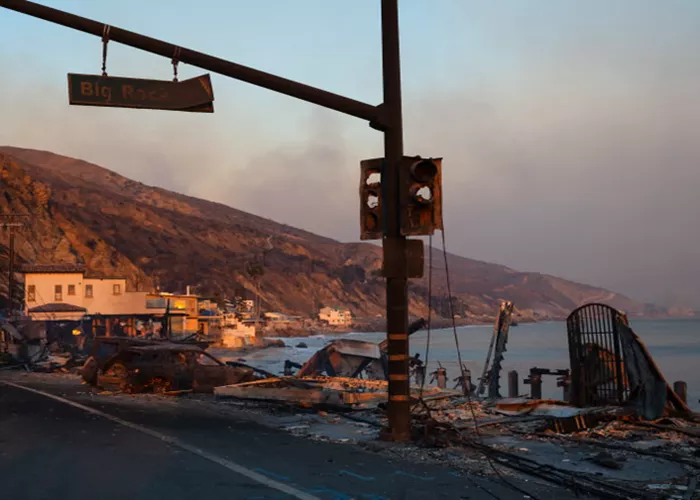
The wildfires, which occurred in January 2025, caused severe damage to Los Angeles neighborhoods. The Palisades fire destroyed nearly 7,000 structures and claimed 12 lives, while the Eaton fire ravaged Altadena, killing 19 people and destroying over 9,400 buildings across nearby areas.
The study, published in the Journal of the American College of Cardiology, also found troubling increases in other health problems. Residents living in neighborhoods directly affected by the wildfires or nearby reported a 24% rise in respiratory illnesses. Additionally, blood test abnormalities jumped by 118%.
Cedars-Sinai is located about 10 to 20 miles from the fire zones. Dr. Cheng noted, “We saw more respiratory illnesses in our ER that matched the worst Covid years, which was striking.”
Though increased respiratory problems due to wildfire smoke were expected, Dr. Cheng was surprised by the sharp rise in heart attacks and blood test abnormalities. “The stress caused by the wildfires seems to have affected many people’s bodies in ways we didn’t fully anticipate,” she said. “It likely affected multiple organs, not just the lungs or heart.”
Blood tests revealed subtle changes in patients’ electrolyte levels and markers of kidney and liver function. These patients had symptoms like dizziness and chest pain, but no clear cause. The tests indicated slight imbalances in things like sodium, potassium, and protein levels.
The fires were especially harmful because they were “wildland-urban interface fires,” which burn both natural and industrial materials, such as plastics and electronics. This type of fire is harder to contain and poses greater risks to human health.
While the study provides important insights, Dr. Cheng emphasized that more research is needed to understand the long-term health effects of these fires. “We have a lot more work to do,” she said. “We’re still piecing together the full impact.”
Related topic:
