
Recent research highlights the complex relationship between hypertension, cardiorenal syndrome, and aging. Zeng et al. (2025) reported that increased estimated pulse wave velocity (ePWV) correlates with albuminuria in hypertensive patients, suggesting that arterial stiffness contributes to early renal damage even before traditional biomarkers, such as serum creatinine, show abnormalities. Similarly, Dai et al. (2025) found that renal cortical stiffness rises with the progression of hypertension, reflecting the silent and progressive nature of hypertensive nephropathy.
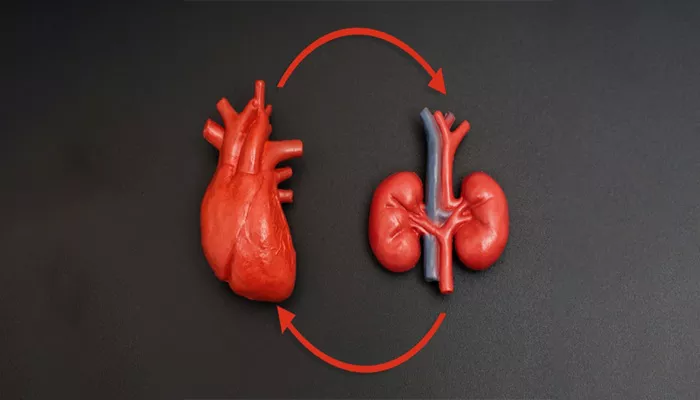
These findings underscore that treating hypertension or cardiorenal syndrome in isolation is insufficient. The studies in this Research Topic shed light on the pathophysiology of these conditions in aging populations, addressing factors such as metabolic changes, mental health, and personal health behaviors (Figure 1).
The kidney–heart axis is particularly sensitive to arterial stiffening and age-related metabolic shifts. Early identification of chronic kidney and cardiac disease progression is therefore critical. Evaluating the development of obesity, metabolic syndrome, and sarcopenia also plays a key role in understanding hypertension progression.
Behavioral and psychological interventions—such as diagnosing depression and promoting life satisfaction—can further support hypertension management. Understanding these interrelated factors is increasingly important as populations age and multimorbidity becomes more common (Figure 1).
Integrating these assessments into population-level screening can enhance early detection, guide public health strategies for preventing and managing hypertension and cardiorenal syndrome, and ultimately improve quality of life. In this context, this knowledge serves as a “friend,” not a “foe,” in combating age-related cardiovascular and renal disease.
Related topic:
