
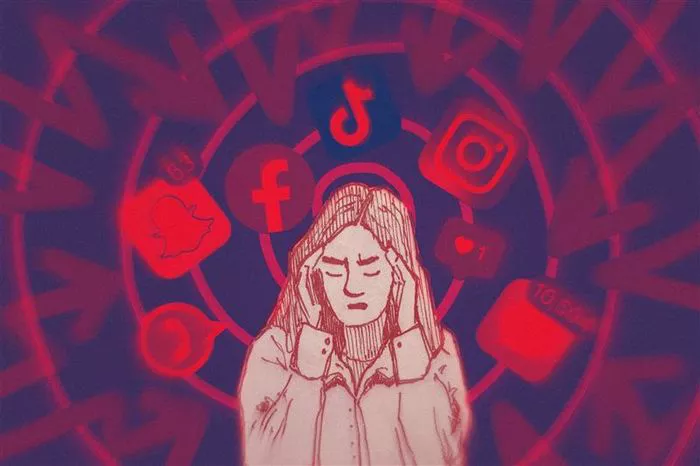
The idea that the internet should be feared rather than embraced is one many of us grew up with. In my childhood, Smartie the Penguin’s “Before you click, click click…” message was drilled into us. However, as online habits such as doomscrolling have become more prevalent and the internet’s presence grows ever stronger, experts are increasingly concerned about how digital technologies are normalizing behaviors linked to obsessive-compulsive disorder (OCD).
A recent study focusing on preteens (9-10 years old) found a troubling connection: for every hour spent playing video games, the likelihood of developing OCD symptoms over the next two years increased by 13%. Watching videos similarly raised the odds by 11%. More troubling still, research suggests that the internet can exacerbate symptoms for those already grappling with OCD. Constant access to information encourages behaviors like compulsive checking, whether it’s repeatedly researching for reassurance or obsessively tracking likes on a social media post.
Beau Roberts, head of student wellbeing at Darwin College, described digital habits as a “coping strategy and pressure point.” She explained that “the constant availability of information, notifications, and comparison loops can amplify stress. For students already dealing with anxiety or perfectionism, the digital sphere becomes another space where worries spiral.” Studies show clear links between OCD-related behaviors and trends in social media use, with one study finding a strong association between “problematic internet use” and compulsions like excessive checking or repetitive cleaning.
OCD is often trivialized in pop culture, as seen with Monica Geller in Friends, where her need for control is played for laughs. But OCD is a real and debilitating disorder that is too often misunderstood. The National Institute of Mental Health defines it as the presence of “uncontrollable and recurring thoughts (obsessions), repetitive and excessive behaviors (compulsions), or both.” This cycle of reassurance-seeking and ritualistic behavior is a response to the anxiety created by intrusive thoughts. The disorder’s prevalence has nearly doubled in the past 16 years, from 1.3% of the population in 2007 to 2.6% in 2023, according to the NHS. Is social media a driving factor in this increase?
Trevor Robbins, professor of cognitive neuroscience at the BCNI, explained that compulsivity exists on a spectrum. “Even in normative individuals,” he said, “questionnaire tools like the Obsessive-Compulsive Inventory can show some level of compulsivity in everyone—whether it’s scientists or proofreaders.” Robbins added that compulsive behaviors like gambling, substance abuse, and internet addiction can trigger OCD-like symptoms, fostering a deeper cycle of compulsivity.
However, Jenna Overbaugh, a counselor specializing in OCD and anxiety, recognizes the benefits of the internet for those dealing with mental health struggles. As a content creator herself, she pointed out that digital platforms can offer greater accessibility for individuals unable to access one-on-one therapy. “It’s crucial to be discerning,” she emphasized. “While there’s a wealth of information online, it’s important to understand that nuance is often lost in short posts or quick videos. People must avoid outsourcing their mental health needs to creators or services that are not equipped to offer adequate support.”
The hyper-academic environment at places like Cambridge amplifies the problem. Beau Roberts observed that students often feel a pressure to “keep up,” with social media and academic communications heightening this sense of comparison. “It creates an atmosphere where rest feels like a risk rather than a necessity,” she said.
Trevor Robbins highlighted the “cumulative buildup of stress,” noting that stress tends to reinforce compulsive behaviors and focused attention, often at the expense of goal-directed flexibility. At academically intense institutions like Cambridge, where students juggle multiple deadlines and engage in intense peer scrutiny, digital platforms intersect with perfectionistic tendencies to worsen OCD symptoms.
In universities, digital tools like online deadlines, emails, and study apps cater to compulsive habits, feeding into perfectionist mindsets. A study by the National Library of Medicine found that undergraduates average over 10 hours of screen time per day, and the growing use of generative AI tools like ChatGPT could further amplify these behaviors.
Digital technologies undeniably have a profound effect on the prevalence and intensity of OCD. Combined with the pressure-cooker academic environment at institutions like Cambridge, the internet can create conditions that worsen the disorder. But these same technologies can also offer hope. The internet provides recovery tools, access to communities, and guidance that can help individuals with OCD manage their symptoms. Rather than avoiding the internet, the challenge for our generation may be learning how to harness its power for recovery, using it as a tool for healing rather than a source of reassurance.
Related topic:
