
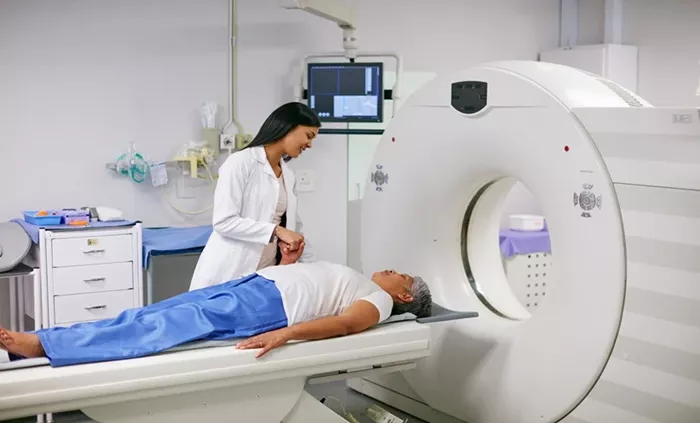
A new artificial intelligence–driven MRI system is showing promise in improving the detection of clinically significant prostate cancer while easing radiology workloads. The automated tool, named ProAI, was designed to address variability in PI-RADS scoring, a widely used but often subjective method for interpreting prostate MRI scans.
Researchers trained and validated ProAI on 7,849 MRI examinations collected from six medical centers and two public imaging datasets. The system analyzes biparametric MRI, a faster, contrast-free imaging protocol, and generates patient-level risk estimates for clinically significant prostate cancer (csPCa).
AI-Assisted MRI Improves Accuracy and Consistency
In pooled external test datasets, ProAI achieved an area under the receiver operating characteristic curve (AUC) of 0.93 (95% CI 0.91–0.95), showing diagnostic performance comparable to PI-RADS while reducing variability between cases. Interpretation variability has long been a limitation of traditional scoring, affecting reproducibility across institutions and clinician experience levels.
A multi-reader, multi-case study with nine clinicians showed that ProAI further improved diagnostic accuracy, raising reader performance from 0.80 to 0.86 when used as a decision aid. Its use also significantly cut the time spent interpreting scans, offering tangible workflow benefits.
Real-World Application Confirms Efficiency Gains
Prospective implementation of ProAI in 1,978 consecutive MRI examinations maintained high diagnostic accuracy (AUC 0.92) and reduced radiology workload by 32%—a critical advantage amid rising demand for prostate imaging and staff shortages. The system also generalized well to external datasets, including the TCIA cohort, where it achieved an AUC of 0.83.
Implications for Prostate Cancer Care
The study’s authors suggest that AI-based MRI decision aids like ProAI can standardize reporting, improve diagnostic efficiency, and streamline cancer care pathways. The findings provide strong evidence that artificial intelligence can help overcome key bottlenecks in prostate cancer imaging.
The research was conducted as part of a registered clinical trial (ChiCTR2400092863), supporting the robustness of the results.
Related topic:
