
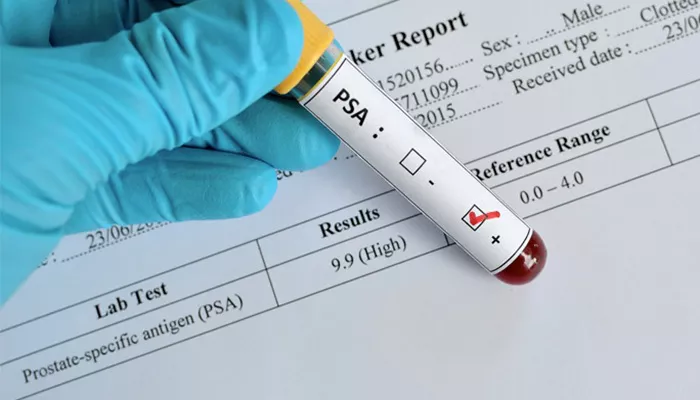
The FDA has approved the IsoPSA® in vitro diagnostic kit to help determine whether men aged 50 and older with elevated prostate-specific antigen (PSA) levels should undergo a prostate biopsy, according to Cleveland Diagnostics, the test’s developer. The test was cleared through the agency’s Premarket Approval process.
IsoPSA uses the company’s IsoClear™ platform to analyze structural changes in protein biomarkers found in blood, offering insights into disease status. The test is already included in major clinical practice guidelines, including the 2025 NCCN Prostate Cancer Early Detection Guideline and the 2023 AUA/Society of Urologic Oncology guideline on early detection.
The FDA’s decision was supported by data from a large prospective study evaluating IsoPSA’s diagnostic performance in men 50 and older with total PSA levels of 4 ng/mL or higher, along with analytical validation studies.
In the multicenter study, 35.6% of participants had high-grade prostate cancer and 58.9% had cancer of any grade. IsoPSA index values rose consistently from benign disease to low-grade and then high-grade cancer.
IsoPSA outperformed both total PSA and percentage free PSA across key diagnostic metrics. For detecting high-grade cancer, IsoPSA achieved an area under the curve (AUC) of 0.783, compared with 0.672 for total PSA and 0.724 for percentage free PSA (P < .001). It also demonstrated higher overall accuracy in patients with PSA levels between 4 and 10 ng/mL.
For high-grade cancer, IsoPSA showed a sensitivity of 0.902 and specificity of 0.455, with a positive predictive value (PPV) of 0.477 and a negative predictive value (NPV) of 0.893. Both total PSA and percentage free PSA had lower specificity and NPV. Similar performance advantages were seen when detecting prostate cancer of any grade.
Based on IsoPSA cutoffs, up to 46% of high-grade and 42% of all-grade biopsies could potentially be avoided in low-risk patients without compromising accuracy. The test also performed consistently across clinically relevant subgroups.
“FDA approval of our IsoPSA kit marks a significant milestone in Cleveland Diagnostics’ mission to help physicians and patients detect cancer early, when it is most treatable,” said Arnon Chait, PhD, the company’s president and CEO.
The study enrolled 1,839 men scheduled for biopsy at eight academic and community centers between 2015 and 2020. Of these, 205 patients were included in the prevalidation phase and 888 in the validation phase. Some patients were excluded from IsoPSA evaluation due to analytical factors, though their data remained usable for PSA comparisons.
IsoPSA testing involved a two-step process. First, the IsoPSA Reagent separated PSA structural variants using a customized physicochemical system. Then, FDA-approved immunoassays measured total and free PSA in both the native plasma and the reagent’s top-phase fraction.
The trial’s prevalidation phase established IsoPSA index cutoffs with at least 90% sensitivity for detecting high-grade and any-grade cancer using receiver operating characteristic (ROC) analysis. The validation phase confirmed these cutoffs, evaluated diagnostic performance, compared IsoPSA with PSA-based measures, and assessed performance across subgroups.
“FDA approval underscores IsoPSA’s value in distinguishing benign PSA elevations from those caused by high-grade cancer,” said Eric A. Klein, MD, emeritus chair of Cleveland Clinic’s Glickman Urological and Kidney Institute. “This milestone reflects a decade of test development and research.”
Related topic:
