
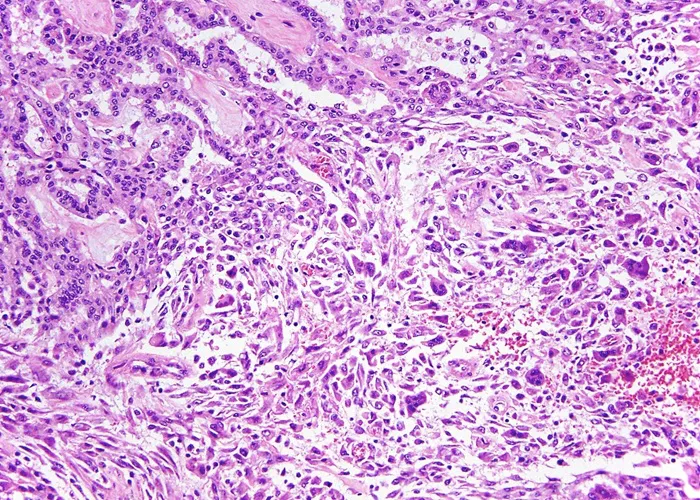
Mesothelioma remains one of the most challenging cancers to diagnose and treat, in part because it can develop in different areas of the body. A recent study from Harbin Medical University in China highlights this complexity through two contrasting patient cases that underscore significant differences in treatment response.
Sharp Contrast in Patient Outcomes
Mesothelioma can arise in the pleura, peritoneum, pericardium, or tunica vaginalis. Pleural mesothelioma accounts for roughly 81 percent of cases and carries a grim prognosis, with median survival of about one year. Peritoneal mesothelioma, while still aggressive, often allows longer survival.
Researchers reported a 72-year-old woman with peritoneal mesothelioma who responded exceptionally well to chemotherapy. Her tumor shrank from 150×160 mm to the point of being undetectable on imaging after treatment.
In contrast, a 59-year-old man with pleural mesothelioma showed resistance to platinum-based therapy. His disease progressed despite first-line pemetrexed/cisplatin and later second-line treatments.
Diagnosis Requires Layered Testing
Mesothelioma affects about two in every 100,000 people and is strongly linked to asbestos exposure. The disease presents major diagnostic challenges, requiring detailed imaging, histopathological analysis, and immunohistochemistry to distinguish it from metastatic adenocarcinoma.
Symptoms differ depending on the tumor site. Pleural cases typically involve chest pain, dyspnea, and pleural effusion, while peritoneal disease often causes abdominal distension, pain, and ascites.
Evolving Treatment Landscape
Although platinum-based chemotherapy has long been the standard first-line therapy, immune checkpoint inhibitors have reshaped treatment strategies. These newer therapies benefit some patients, yet effectiveness varies widely, and their impact across different anatomical sites remains unclear.
The two case reports—one showing dramatic tumor regression and the other marked resistance—illustrate these uncertainties. They highlight the need for precise pathological evaluation and individualized treatment based on tumor location and genetic factors.
Related topic:
