
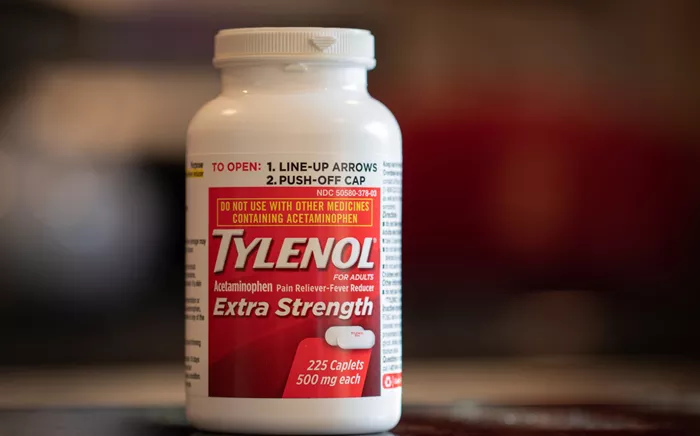
Unproven claims on social media continue to link acetaminophen to autism in children. But medical experts say the more urgent and well-documented danger is something far more common: taking too much of the drug itself.
Each year in the United States, acetaminophen poisoning sends about 56,000 people to emergency departments and leads to 2,600 hospital admissions. It is a major cause of acute liver failure and contributes to roughly one-fifth of all liver transplants. These numbers make acetaminophen overdose one of the top causes of serious harm from non-prescription drugs.
Kennon Heard, MD, PhD, a professor in the Department of Emergency Medicine at the CU Anschutz Medical Campus, has studied acetaminophen toxicity for more than 20 years. He is now co-leading a multiyear clinical trial that tests whether a drug originally used for antifreeze poisoning can help protect the liver in severe overdose cases.
Heard explains that CU and Denver Health, home of the Rocky Mountain Poison & Drug Safety center, have played a major role in acetaminophen research for four decades. “There’s a long history of this work here,” he says. “It’s great to be part of it.”
Why Overdoses Happen
Acetaminophen is best known as the active ingredient in Tylenol, but it is also included in many store-brand pain relievers, cold and flu medicines, sinus treatments, and menstrual relief products.
It is safe and effective when taken as directed. Problems occur when people take more than the recommended amount. Sometimes this happens accidentally. Sometimes it is because someone is in severe pain and assumes that more pills will work faster. In other cases, people take repeated extra doses over several hours or days. Acetaminophen overdoses also occur in situations involving self-harm, especially because the drug is so easy to find in most homes.
The standard antidote for acetaminophen poisoning is acetylcysteine. It works well, but only if given within eight hours of the overdose. Many patients do not seek medical care until liver damage has already started, and at that point the antidote is far less effective.
A New Focus: Fomepizole
Heard and his colleagues are now studying the use of fomepizole, a drug approved for treating poisoning caused by ethylene glycol and methanol, both found in antifreeze. Fomepizole blocks enzymes that would otherwise turn these chemicals into toxic byproducts.
Since the 1990s, small case reports and animal studies have suggested that fomepizole may also help protect the liver during severe acetaminophen overdose. A recent study showed that more doctors are already using the drug off-label for this purpose.
Richard Dart, MD, PhD, a longtime researcher and director of Rocky Mountain Poison & Drug Safety, encouraged starting a clinical trial to gather stronger evidence.
Testing the Idea
The current phase II trial is designed to find out whether adding fomepizole to standard acetylcysteine treatment can reduce liver injury in high-risk patients. It is a double-blind study, meaning neither doctors nor patients know who receives which treatment.
Researchers will compare liver enzyme levels in patients who receive both drugs with those who receive acetylcysteine alone. The trial is enrolling patients at several sites, including Denver Health, UCHealth University of Colorado Hospital, and Children’s Hospital Colorado. Enrollment is slow because of strict eligibility requirements, but researchers hope to reach about 40 patients within 12 to 18 months.
If the results show promise, the team plans to move to a larger trial that will examine survival rates and whether patients need liver transplants.
Heard stresses that the most important message for the public is simple: read the label, follow the dosing instructions, and remember that acetaminophen may be in more than one product in your medicine cabinet. “We’re learning that accidental overdoses cause almost as many deaths as intentional ones,” he says.
Heard’s collaborators include Dart and Andrew Monte, MD, PhD, also a professor of emergency medicine.
Related topics
Narcissistic Traits shows differently in men and women. Here’s how to spot it
Mental Illness Support That Transforms Diabetes Outcomes
How a Mental Health Therapist Use EMDR to Heal Women Over 50
