
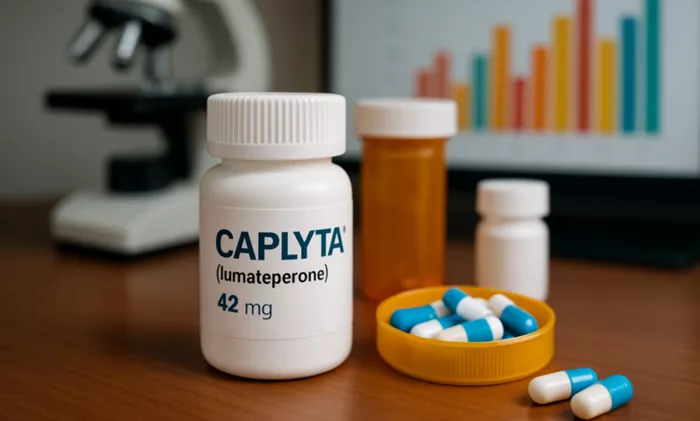
On November 6, 2025, the U.S. Food and Drug Administration (FDA) approved Johnson & Johnson’s lumateperone (Caplyta) for use as an adjunctive treatment in adults with major depressive disorder (MDD). This marks an expansion of Caplyta’s indications beyond schizophrenia and bipolar depression, now including unipolar depression in both adjunctive and monotherapy settings.
Evidence from Clinical Trials
The FDA’s approval was supported by data from two pivotal phase 3 randomized controlled trials (studies 501 and 502). In these studies, adults with MDD who had a partial response to standard antidepressant therapy received 42 mg/day of lumateperone in addition to their existing antidepressant regimen.
Efficacy: Both trials demonstrated statistically significant improvements in the Montgomery-Åsberg Depression Rating Scale (MADRS) total score at six weeks compared with placebo. The mean effect size was approximately 4.5–4.9 points.
Sustained response: An open-label extension study (503) reported an 80% response rate and 65% remission (MADRS ≤10) at 26 weeks, suggesting potential for long-term symptom relief.
These findings indicate that lumateperone can enhance antidepressant response in patients not achieving full symptom control with standard therapy alone.
Safety and Tolerability
Lumateperone’s safety profile distinguishes it from other atypical antipsychotics often used as adjuncts in MDD. Key observations include:
Metabolic and movement risks: Minimal risk of weight gain, metabolic changes, extrapyramidal symptoms (EPS), and prolactin elevation—adverse effects commonly associated with atypical antipsychotics such as aripiprazole or brexpiprazole.
Common side effects: Most frequent adverse events (>5% incidence and at least twice placebo) were dry mouth, fatigue, and tremor.
Long-term safety: Extended studies reaffirm low cardiometabolic impact and continued tolerability over time.
This profile may make lumateperone particularly suitable for patients who are sensitive to metabolic or movement-related side effects.
Clinical Implications
For clinicians, lumateperone offers a well-tolerated adjunctive option for adults with MDD who experience partial response to selective serotonin reuptake inhibitors (SSRIs) or serotonin-norepinephrine reuptake inhibitors (SNRIs).
Treatment considerations: Monitoring should focus on mild sedation, fatigue, tremor, and dry mouth, while extensive metabolic monitoring is generally not required.
Onset and remission: Measurable improvement is typically observed by six weeks, with the potential for remission within six months among responders.
Lumateperone’s combination of efficacy and tolerability may allow it to serve as a first-line adjunctive therapy, bridging the gap between standard antidepressants and traditional atypical antipsychotics.
Expert Perspective
Dr. Suresh Durgam, the primary investigator on these trials, emphasized the significance of the new option for patients with incomplete response to antidepressants:
“People living with MDD often spend years cycling through treatment options, searching for something that will provide adequate relief. For patients experiencing partial relief with their current treatment, adding Caplyta can offer hope that complete symptom relief is possible.”
He added that remission is a critical treatment goal, as patients who do not achieve it continue to experience lingering depressive symptoms, negatively affecting daily life and quality of life.
Related topics
