
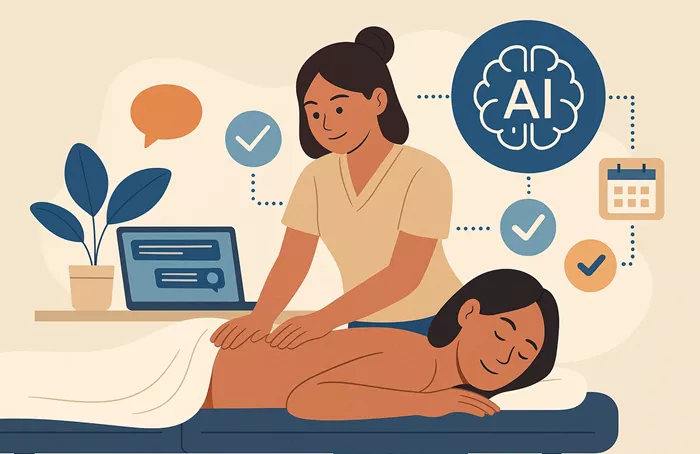
Researchers at Ontario Tech University in Oshawa, Canada, have developed TheraQuest, an AI-powered online platform designed to train massage therapists through immersive virtual scenarios. The prototype, detailed in a study by Shengqian Wang of the Faculty of Science, leverages artificial intelligence to simulate real-world therapeutic interactions, aiming to address key challenges in massage therapy education.
Tackling Communication Barriers in Clinical Training
The platform was developed in response to communication difficulties that frequently contribute to misdiagnoses, particularly in multilingual environments. In Canada, patients who are not proficient in English or French may struggle to describe complex symptoms accurately or may passively agree with therapists’ assessments. TheraQuest seeks to bridge this gap by enabling trainees to engage with virtual patients who present diverse linguistic and cultural backgrounds, mirroring real-life scenarios.
AI-Generated Virtual Patients
TheraQuest employs large language models (LLMs) to generate a wide variety of virtual patients, each with unique symptoms and profiles. These virtual patients provide verbal and textural information, prompting trainees to ask follow-up questions, adjust massage techniques, and refine pressure levels. Immediate feedback from the system, coupled with expert assessment summaries, allows trainees to evaluate their performance and improve diagnostic accuracy.
Gamified Learning Enhances Engagement
A distinctive feature of TheraQuest is its gamified approach to education. Trainees earn performance-based rewards, including stars for communication, dialogue, and technical competence. These stars contribute to a global leaderboard, motivating participants to refine their skills, accumulate points, and actively engage in further training. The competitive aspect of gamification encourages sustained learning while reinforcing critical clinical competencies.
Avoiding Physical Constraints of VR
Unlike other immersive healthcare training tools, TheraQuest does not require augmented or virtual reality headsets. While VR can enhance experiential learning, the weight and extended use of headsets were deemed impractical for massage therapy training. By operating as a web-based platform, TheraQuest ensures accessibility and comfort, allowing trainees to participate without physical strain.
Evidence-Based Development
The development of TheraQuest was guided by a comprehensive review of current massage therapy training practices, the integration of virtual patients in clinical education, and trends in gamified healthcare teaching. The system highlights specific actions that influence patient outcomes, identifies errors such as incorrect pressure application or treatment of wrong areas, and encourages corrective action in real time.
Conclusion
TheraQuest represents a significant step forward in professional massage therapy training, combining AI, gamification, and evidence-based teaching strategies to enhance learning outcomes. By simulating realistic patient interactions and providing structured feedback, the platform equips trainees with the communication and technical skills necessary for competent, culturally sensitive practice.
Related topics
