
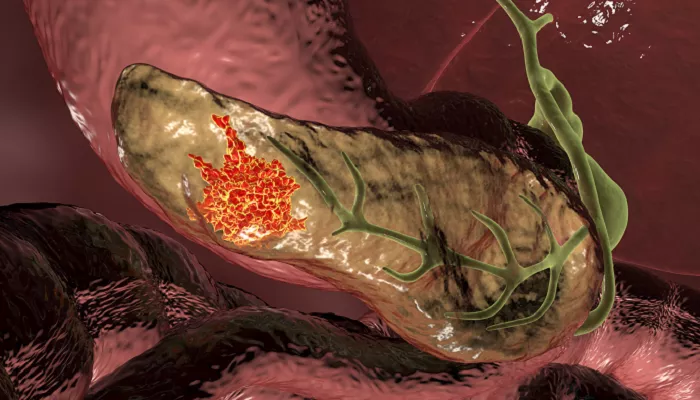
Scientists at Sanford Burnham Prebys’ NCI-Designated Cancer Center have uncovered critical differences in how pancreatic cancer progresses in older versus younger organisms, offering new insights for developing age-appropriate treatments.
Published November 7, 2025, in Cancer Research, the study addresses a significant clinical challenge: pancreatic cancer primarily affects older adults (average diagnosis age 70, with nearly two-thirds of cases occurring over age 65), yet most preclinical research uses young animal models. This disconnect may explain why many promising therapies fail when translated to the elderly patients who constitute the majority of pancreatic cancer cases.
Experimental Design and Age-Related Findings
The research team compared pancreatic cancer progression in young (approximately two-month-old) versus aged (over 1.5-year-old) mice implanted with genetically identical cancer cells. Results revealed striking age-dependent differences:
Accelerated growth: Tumors grew significantly faster in aged mice
Enhanced metastasis: More cancer cells spread to distant tissues in older animals
Microenvironment changes: Aged tumors exhibited increased collagen deposition and extracellular matrix remodeling
“These findings clearly demonstrate that aging accelerates cancer progression,” said lead author Dr. Priyanka Gupta. “They highlight the limitations of using young mouse models to test drugs for a disease that predominantly affects older patients.”
Mechanistic Insights into Tumor Microenvironment
Gene expression analysis identified nearly 550 genes differentially expressed between young and aged tumors. Aged microenvironments showed:
- Impaired immune function: Reduced T-cell activity and infiltration
- Fibrotic barriers: Increased collagen creating physical barriers against immune cell entry
- Matrix remodeling: Jelly-like extracellular matrix changes promoting metastasis
The aged tumor microenvironment essentially creates a “fortress” that blocks immune detection while supporting cancer spread.
Therapeutic Potential and Rejuvenation Approach
Researchers tested whether transplanting young cancer-associated fibroblasts (CAFs)—support cells that provide nutrients to tumors—could reverse age-related changes. Remarkably, implanting young CAFs into aged mice:
- Rejuvenated microenvironment: Restored younger characteristics
- Reduced metastasis: Reversed metastatic patterns seen in aged animals
“This demonstrates the potential for therapeutic intervention targeting the tumor microenvironment,” said senior author Dr. Cosimo Commisso.
Clinical Implications and Paradigm Shift
The research supports a fundamental shift toward age-appropriate cancer modeling. “By adopting more patient-centric approaches using age-relevant preclinical models, we can better develop therapies that work for the patients who need them most,”
explained Dr. Commisso. Future directions include exploring drugs or gene therapies that can mimic this rejuvenation effect in human patients, potentially making tumors more susceptible to existing treatments like immunotherapy.
Research Significance and Future Directions
This study provides a foundation for developing strategies that consider biological age as a critical factor in cancer treatment. By focusing on the specific challenges faced by elderly pancreatic cancer patients—who often cannot tolerate standard therapies due to frailty—researchers aim to create more effective, targeted approaches that could expand treatment options for this vulnerable population.
Related topics:
