
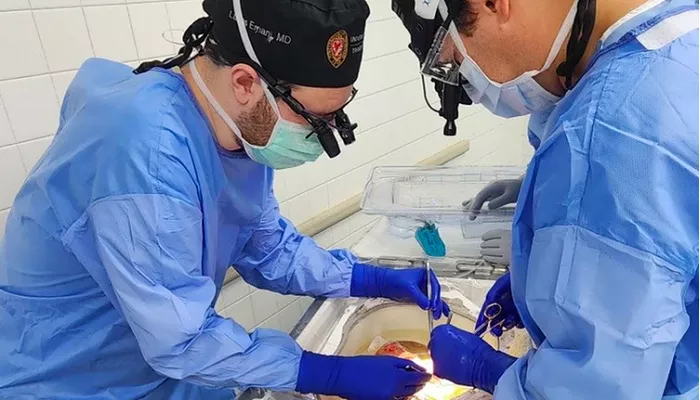
A landmark long-term follow-up study coordinated by the University Medical Center Groningen (UMCG) has demonstrated that deceased donor kidneys preserved on perfusion machines maintain functional superiority over static cold-stored kidneys even a decade after transplantation.
Published on November 6, 2025, in The New England Journal of Medicine, these findings provide the strongest evidence to date supporting machine perfusion as the optimal preservation method for transplant organs. The research represents 15 years of longitudinal data tracking patient outcomes across six European countries.
Study Design and Participant Tracking
The investigation followed 818 kidney transplant recipients from 55 transplant centers across six European nations, all of whom participated in the original Machine Preservation Trial.
Researchers conducted comprehensive follow-up assessments to determine the status of all patients and kidneys ten years post-transplantation. This represents the longest and most extensive comparison of machine perfusion versus static cold storage outcomes ever conducted.
Key Long-Term Findings
The data revealed significant long-term advantages for machine-preserved kidneys:
Overall Survival: 79% of machine-perfused kidneys remained functional at 10 years versus 73% of static cold-stored kidneys
Extended Criteria Donors: The difference was more pronounced for lower-quality kidneys (70% vs 60% functional at 10 years)
Patient Survival: Similar patient survival rates between both groups at the 10-year mark
Organ Function: Comparable kidney function among still-functioning transplants in both groups
Clinical Implications and Technological Advantage
“These exciting results provide definitive evidence that the benefits of machine perfusion persist long-term,” said lead author Cyril Moers, transplant surgeon and scientist at UMCG. The technology involves continuously circulating chilled (1-10°C) preservation solution through the donor kidney’s blood vessels.
This approach maintains organ viability better than static storage by providing oxygen and nutrients while removing waste products. Most machines are portable and user-friendly, typically initiating perfusion immediately after organ retrieval at the donor hospital and continuing until transplantation.
Evolution of Clinical Practice
The original Machine Preservation Trial, also coordinated from Groningen and published in NEJM in 2009 and 2012, demonstrated superior short-term outcomes including earlier graft function and better 1- and 3-year survival. Those findings already transformed clinical practice
making machine perfusion the preferred preservation method in many countries. However, the medical community had questioned whether these early advantages would persist long-term, particularly given how many medical innovations show diminishing benefits over time.
Policy Implications and Future Directions
These robust long-term results should support broader implementation and insurance reimbursement for machine perfusion technology.
The findings are particularly significant given the global organ shortage, as they demonstrate that even marginal-quality kidneys from extended criteria donors can achieve excellent long-term outcomes when properly preserved. The research team continues to investigate how machine perfusion parameters might be optimized for specific donor types and recipient characteristics to further improve transplant success rates.
Related topics:
