
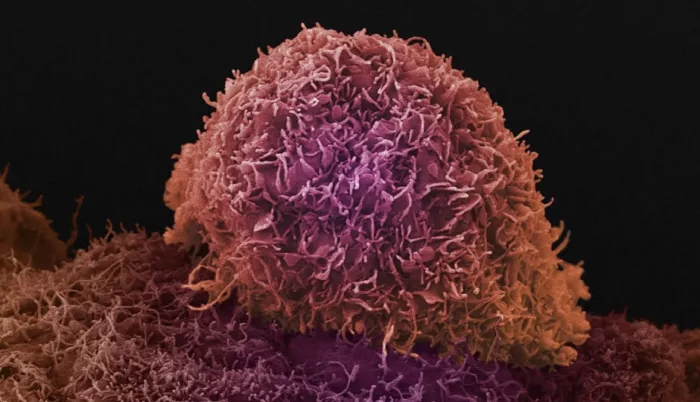
Scientists from UC San Francisco, the Arc Institute, and Fred Hutchinson Cancer Center have identified PTGES3, a previously poorly characterized protein, as a crucial regulator of the androgen receptor in prostate cancer.
Published in Nature Geneticson November 5, this discovery redefines PTGES3’s biological role and reveals a promising new therapeutic target for aggressive prostate cancers that have developed resistance to current hormone therapies. The finding emerged from systematic CRISPR screening approaches that uncovered PTGES3’s unexpected function in gene expression regulation.
Innovative Methodology and Screening Approach
The research team developed a novel fluorescent tagging system that enabled real-time tracking of androgen receptor levels in prostate cancer cells. The androgen receptor, a hormone-sensing protein essential for normal prostate development, becomes hyperactive in prostate cancer and drives tumor progression.
This labeling innovation allowed researchers to conduct genome-wide CRISPR screens to identify genes critical for maintaining androgen receptor levels in aggressive cancer cells. By systematically turning off genes and observing which ones caused the glowing androgen receptor protein to disappear, the team identified both known regulators and unexpected candidates.
Key Findings and Mechanistic Insights
The screening revealed PTGES3 as a previously unrecognized androgen receptor regulator. Further investigation demonstrated that PTGES3 operates through a dual mechanism in cancer cells:
- Cytoplasmic function: Acts as a co-chaperone that helps stabilize the androgen receptor protein
- Nuclear function: Serves as a co-factor enabling androgen receptor binding to DNA and activation of target genes
Patient data analysis showed that individuals with high PTGES3 expression had significantly worse outcomes following hormone therapy, while mouse studies demonstrated that inhibiting PTGES3 delayed tumor growth and reduced androgen receptor levels.
Clinical Implications and Therapeutic Potential
“Previous attempts to target transcription factors have focused on DNA-binding and activation domains,” said first author Haolong Li, who conducted the research at UCSF and is now an assistant professor at Fred Hutch. “Our approach targeting regulator stability has received less attention but shows significant promise.”
The study provides a template for understanding other important transcription factors in hormone-driven cancers, with potential applications to over 20 transcription factors relevant to oncology research.
Research Legacy and Future Directions
The research team is now working to understand the structural details of how PTGES3 interacts with the androgen receptor. Their long-term goal is to develop therapies targeting this interaction, potentially using protein degradation strategies that have shown promise in clinical trials.
The study stands as part of the legacy of co-senior author Felix Feng, a professor of radiation oncology, urology, and medicine at UCSF who passed away in December. “We miss Felix deeply and hope this work will be part of his legacy,” said co-senior author.
Funding and Commercial Development
The research was supported by multiple organizations including the NIH, Prostate Cancer Foundation, Department of Defense Prostate Cancer Research Program, Howard Hughes Medical Institute, and others. The researchers have filed patent applications related to targeting PTGES3, indicating the therapeutic potential of this discovery for treating advanced prostate cancer.
Related topics:
