
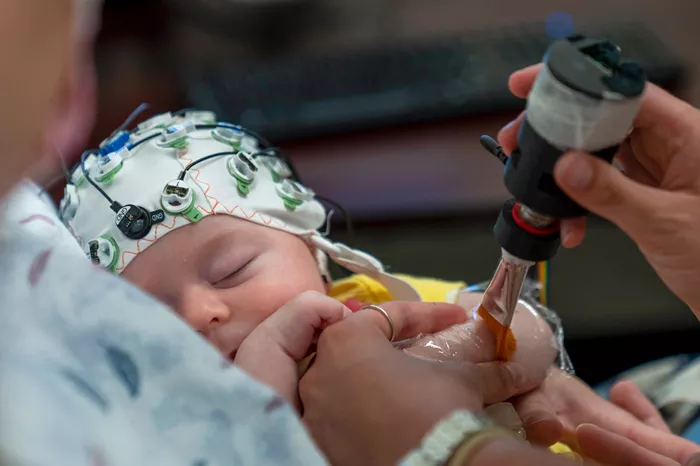
A revolutionary study from the intersecting fields of neuroscience and developmental psychology has shed new light on one of modern medicine’s most pressing challenges—early detection of Autism Spectrum Disorder (ASD). The research, conducted by da Silva, V.H. and Martins, Y.R. in collaboration with Neto, P.A.S.O. and others, is titled “Eye Tracking Screening for ASD in Nursery: Is Early Diagnosis Possible? A Large-scale Real-life Experiment.” This large-scale, real-world study represents a remarkable step toward recognizing children at risk of autism during their formative nursery years.
Understanding the Research Objective
The study’s core aim is to assess the effectiveness of eye-tracking technology in detecting autism-related visual attention patterns among toddlers. As autism prevalence rises globally, early diagnosis becomes ever more essential to ensure timely interventions that can improve developmental trajectories. Traditional assessments often depend on physicians’ observations and parental reports—methods that, while valuable, are sometimes subjective or limited. In contrast, eye-tracking technology offers an objective, data-driven approach that could enhance accuracy and accessibility in early screening.
Eye Tracking as an Innovative Diagnostic Tool
Researchers implemented an extensive parent-child observation model in nursery environments to study toddlers’ natural interactions. Using advanced eye-tracking devices, they monitored how young children responded to various visual stimuli, such as animations and emotional imagery. The technology recorded gaze direction, fixation duration, and movement patterns—metrics that could reveal potential early signs of autism.
Children with ASD often display unique gaze behaviors, such as reduced attention to faces or social cues. By identifying these early through technology, the study underscores the promise of non-invasive tools in transforming early childhood developmental screening.
Methodology and Participant Engagement
The investigation included hundreds of participants aged one to three years, giving the study strong statistical reliability. Each child engaged with visually stimulating activities while sophisticated cameras and software tracked eye movements. These detailed observations enabled researchers to distinguish between typical and atypical engagement with social and emotional content. The resulting data highlighted how small differences in gaze duration, shift frequency, and social responsiveness could serve as predictive markers for ASD.
Key Findings and Diagnostic Implications
One of the study’s most noteworthy discoveries was the contrast in attention focus between children later diagnosed with ASD and those without such outcomes. The findings suggest that eye-tracking could become a standard diagnostic component in early developmental assessments.
The research also emphasized the importance of sensitivity and specificity in interpreting eye-tracking results. While the technology showed promising accuracy, the researchers noted that training professionals in data interpretation is critical to prevent misdiagnosis and to ensure consistent results across diverse populations.
Shaping the Future of Autism Understanding
Beyond its clinical implications, the study contributes to reshaping the broader narrative surrounding autism. By emphasizing empathy, early support, and inclusion, it challenges outdated stigmas and advocates for child-friendly diagnostic processes. Non-invasive, tech-driven methods like this make screenings more comfortable and accessible, encouraging earlier interventions that can significantly improve developmental outcomes.
Role of Parental Collaboration and Feedback
An integral aspect of the research was the active engagement of parents. Families were closely involved throughout the process, gaining firsthand insights into how eye-tracking works and what results signify. Parents reported mixed experiences—many appreciated the approach’s innovation, while others emphasized the importance of ensuring children’s comfort during assessments. These observations will be essential in refining the methodology for broader, real-world applications in nursery and preschool settings.
Integrating AI and Global Accessibility
The study also paves the way for future integration of machine learning and artificial intelligence to enhance pattern recognition and provide instant feedback to clinicians and caregivers. As the technology matures, one of the major challenges will be ensuring accessibility across diverse cultural and economic contexts. Equitable deployment will depend on collaboration among families, educators, and healthcare professionals, as well as supportive public health policies.
A New Horizon for Pediatric Healthcare
The research by da Silva and colleagues marks a major leap toward a future where eye-tracking technology becomes standard in pediatric screening. By combining scientific precision with compassion, the study envisions a world where children with ASD receive early support that allows them to flourish in inclusive, understanding environments. As this field advances, it holds the potential to transform not only diagnostics but the entire landscape of childhood development and neurodiversity.
Related topics
New Hair Test Offers Hope For Early Autism Detection
Rising NHS demand for ADHD test deepens community care backlog
New Vitamin K Analogues Offer Hope for Alzheimer’s Disease Recovery
