
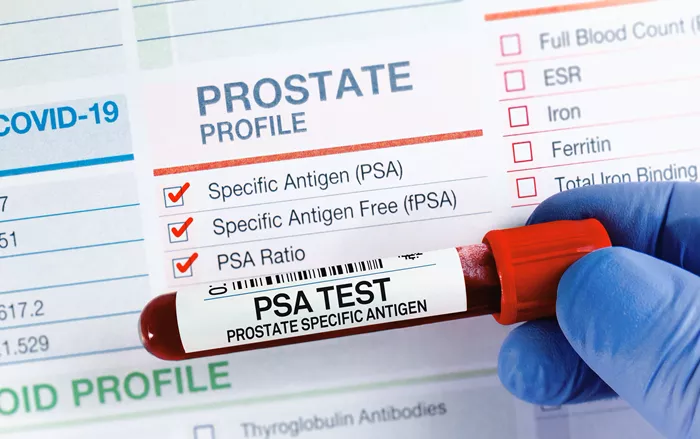
Prostate cancer develops in the cells of the prostate, a small gland located below the bladder and in front of the rectum. It is one of the most common cancers in men, particularly over the age of 65. While rare under 50, risk increases if you are Black or have a family history of the disease.
Types of Prostate Cancer
Early (Localized) Prostate Cancer
The cancer is confined to the prostate gland.
Locally Advanced Prostate Cancer
The cancer has spread through the capsule around the prostate and may affect nearby tissues or organs.
Advanced (Metastatic) Prostate Cancer
The cancer has spread to other parts of the body, commonly the bones.
Trans women and non-binary people assigned male at birth should also be aware of prostate cancer risk.
Symptoms of Prostate Cancer
Early-stage prostate cancer may not cause symptoms. When symptoms do appear, they often resemble those of non-cancerous conditions like benign prostatic hyperplasia (BPH).
- Frequent urination, especially at night
- Difficulty starting or maintaining urine flow
- Feeling of incomplete bladder emptying
- Urgent need to urinate
- Blood in urine or semen
- Pain when urinating or ejaculating (rare)
If cancer spreads, it may cause bone pain, particularly in the back.
Risk Factors
Certain factors increase the risk of prostate cancer:
- Black ethnicity
- Family history of prostate cancer
- Age over 65
Diagnosis
Diagnosis usually starts with a visit to your primary care doctor, who may perform:
- Digital rectal examination (DRE)
- Prostate-specific antigen (PSA) blood test
If results are abnormal, you may be referred to a urologist for further tests, including:
- Multi-parametric MRI scan
- Trans-rectal ultrasound (TRUS) or trans-perineal (TP) biopsy
- CT scan or bone scan for staging
Staging and Grading
Prostate cancer is classified by:
- Stage: Size and spread of the cancer
- Grade: Gleason score or Grade Group, which indicates how aggressive the cancer is
- Risk Group: Determined using PSA, stage, and Gleason score (e.g., Cambridge Prognostic Group)
Treatment Options
A multidisciplinary team (MDT) helps choose the best treatment based on health, age, cancer stage, and preferences. Options include:
Early or Locally Advanced Prostate Cancer
- Surgery (radical prostatectomy)
- Radiotherapy
- Hormonal therapy
- Active monitoring
- Chemotherapy (in some cases)
Advanced (Metastatic) Prostate Cancer
- Hormonal therapy
- Chemotherapy
After Treatment
Regular follow-ups are essential. Support is available from family, friends, or organizations such as Prostate Cancer UK and Macmillan Cancer Support.
Sexual Health and Fertility
Treatments can affect libido, cause erectile dysfunction, and impact fertility. Discuss concerns with your doctor and consider sperm storage before treatment if needed.
Well-being and Recovery
Maintaining a healthy lifestyle, including balanced diet and physical activity, can support recovery and overall well-being.
YOU MAY ALSO LIKE
Prostate Cancer Screening Bill Introduced in New Zealand
Prostate Cancer Awareness: Why a PSA Test Could Save Your Life
New Urine Test May Transform Prostate Cancer Diagnosis Beyond PSA Test
