
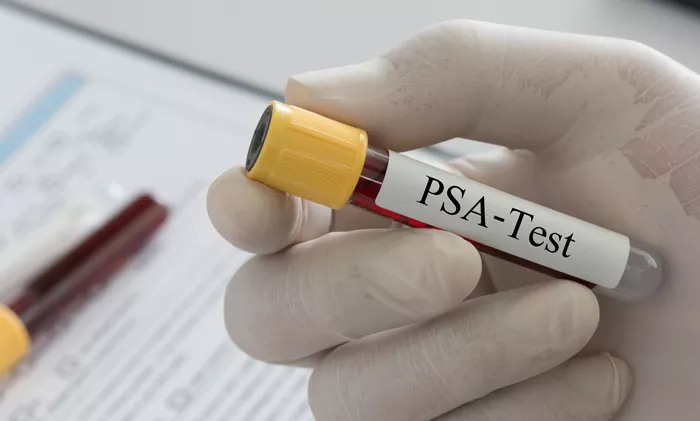
Prostate cancer is one of the most common cancers among men, but there is currently no national screening program in the U.S. or U.K. Researchers and health committees continue to weigh the benefits and risks of widespread testing. In the meantime, several screening tests are available—each with its own advantages and limitations. The good news: many of these tests can be used together to improve accuracy, and invasive “finger exams” are now largely outdated.
1. PSA Test (Prostate-Specific Antigen)
What it is
A simple blood test that measures the level of prostate-specific antigen, a protein produced by the prostate. Elevated PSA levels may indicate cancer, although other conditions like benign enlargement can also increase PSA.
Who can get it
Men over 50 can request the test from their doctor. Private testing companies also offer PSA screening.
Procedure
A standard blood draw, compared to age-specific PSA ranges. If results are high, further testing is recommended.
Pain level
Minimal—similar to any blood test.
Results
Typically 1–2 weeks through public health services; 24–48 hours with private testing.
Accuracy
PSA can detect some cancers, but its ability to identify cancer is about 40%. Some cancers do not raise PSA levels, and benign conditions can falsely elevate it.
2. MRI (Magnetic Resonance Imaging)
What it is
An MRI produces detailed images of the prostate using magnetic fields, highlighting abnormal tissue that may indicate cancer.
Who can get it
Usually performed if PSA is high or other abnormalities are suspected. Available both through public health services and privately.
Procedure
Lying in a tube for 15–40 minutes while images are captured. New studies suggest shorter, dye-free scans may be as effective.
Pain level
None, though some men may feel claustrophobic. Earplugs and music are often provided.
Results
1–2 weeks through public health systems; faster if done privately.
Accuracy
Very high—when combined with PSA, MRI can accurately detect cancer in about 93% of cases.
3. Prostate Biopsy
What it is
A procedure in which fine needles take tissue samples from the prostate, guided by MRI and ultrasound imaging.
Who can get it
Performed if cancer is suspected after PSA or MRI results.
Procedure
Day procedure with local anesthesia. Needles are inserted through the perineum while guided by imaging.
Pain level
Moderate, but manageable with anesthesia.
Results
1–2 weeks.
Accuracy
Nearly 100% when targeted by imaging, making it the most definitive test.
4. Genetic “Spit” Test
What it is
A saliva-based test that identifies genetic risk factors for prostate cancer.
Availability
Not yet commercially available.
Procedure
Provide a saliva sample.
Pain level
None.
Accuracy
Still being studied, but early research shows it can detect high-risk men who might be missed by PSA alone.
5. EpiSwitch PSE Blood Test
What it is
A blood test that examines DNA folding and immune markers to identify prostate cancer.
Availability
Commercially available through doctors (cost: £750–£900).
Pain level
Minimal—blood draw.
Results
Within five days.
Accuracy
About 93% when combined with PSA.
6. Urine Test (In Development)
What it is
A urine test detecting proteins and biomarkers linked to prostate cancer.
Availability
Not yet widely available; still under clinical trials.
Pain level
None.
Results
Potentially quick at-home results in the future.
Accuracy
Preliminary studies show around 92%, higher than PSA alone (≈60%).
7. Digital Rectal Exam (DRE)
What it is
A finger exam to feel for prostate abnormalities.
Availability
Rarely used today.
Procedure
A doctor inserts a finger into the rectum to assess the prostate.
Pain level
Uncomfortable.
Accuracy
Low—only detects large tumors and is no longer recommended as a screening tool.
Bottom Line
The PSA test remains a standard first step for prostate cancer screening, but combining it with MRI or emerging tests significantly improves detection. Biopsy is the definitive diagnostic tool, while genetic and urine tests offer promising non-invasive alternatives. Discuss your risk factors and screening options with your healthcare provider.
YOU MAY ALSO LIKE
New Urine Test May Transform Prostate Cancer Diagnosis Beyond PSA Test
Prostate Cancer Awareness: Why a PSA Test Could Save Your Life
