
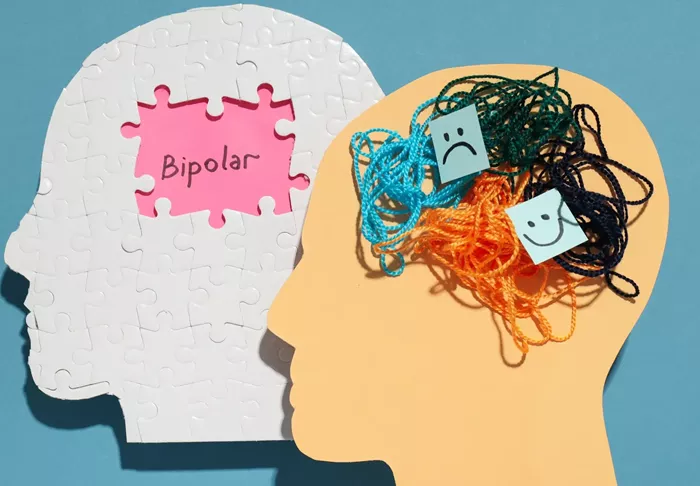
Bipolar disorder (BD), a chronic psychiatric condition marked by recurring episodes of depression and mania, continues to place a significant burden on global health. Despite its prevalence, the biological mechanisms underlying BD remain poorly understood. While mitochondrial dysfunction has long been implicated, the specific brain regions affected have not been clearly identified—until now.
A research team in Japan has shed new light on this question by examining the paraventricular thalamic nucleus, a region of the brain involved in mood regulation and cognition.
Led by Professor Tadafumi Kato of Juntendo University Graduate School of Medicine and Dr. Akito Nagakura of Tokyo Metropolitan Matsuzawa Hospital, the team’s findings were published September 2, 2025, in Psychiatry and Clinical Neurosciences.
“Animal studies have suggested a role for the paraventricular thalamic nucleus in bipolar disorder, but human neuropathological evidence has been scarce,” said Prof. Kato. “We aimed to determine whether the accumulation of proteins associated with neurodegenerative diseases contributes to BD pathology.”
The study analyzed postmortem brain tissue from patients with BD, focusing on the paraventricular thalamus and medial temporal regions. Researchers applied immunohistochemical techniques to detect key neurodegenerative proteins, including phosphorylated tau, amyloid β, α-synuclein, and TDP-43, as well as markers of granulovacuolar degeneration (GVD) such as CHMP2B and CK-1δ.
The results revealed elevated neurofibrillary tangle (NFT) stages and argyrophilic grain pathology in BD patients—both linked to tau protein accumulation and typically associated with aging. Notably, CHMP2B-positive GVD was identified in the paraventricular thalamus in roughly half of the BD cases, marking the first report of this finding.
These discoveries suggest that abnormal protein buildup and thalamic dysfunction may play a central role in the disease’s biology. The findings further support the view that BD is fundamentally a brain-based disorder, extending understanding beyond clinical symptoms to measurable neuropathological changes.
As knowledge of BD’s biological underpinnings advances, experts stress the urgent need for earlier detection, personalized treatment approaches, and therapies targeting root mechanisms rather than solely managing symptoms.
YOU MAY ALSO LIKE
Overprotective Parenting Tied to Higher Anxiety in University Freshmen
BetterHelp Sees 40% of New Users Trying Therapy for the First Time
