
A research team from Uppsala University in Sweden has achieved a groundbreaking milestone in the treatment of type 1 diabetes. Their findings, published in the New England Journal of Medicine on August 6, demonstrate that donor islet β – cells modified using CRISPR – Cas gene – editing technology have successfully survived and functioned for 12 weeks in a type 1 diabetes patient without the need for immunosuppressive drugs. This development offers new hope for a potential cure for the disease.
Type 1 diabetes is an autoimmune disorder where the body’s immune system mistakenly attacks and destroys the insulin – producing islet β – cells in the pancreas. Current insulin therapies can manage blood sugar levels, but patients must rely on them for life. Moreover, these patients face an increased risk of cardiovascular diseases and often have a shorter lifespan. Traditional islet cell transplantation is hampered by immune rejection, forcing patients to take immunosuppressive drugs that come with significant toxic side – effects.
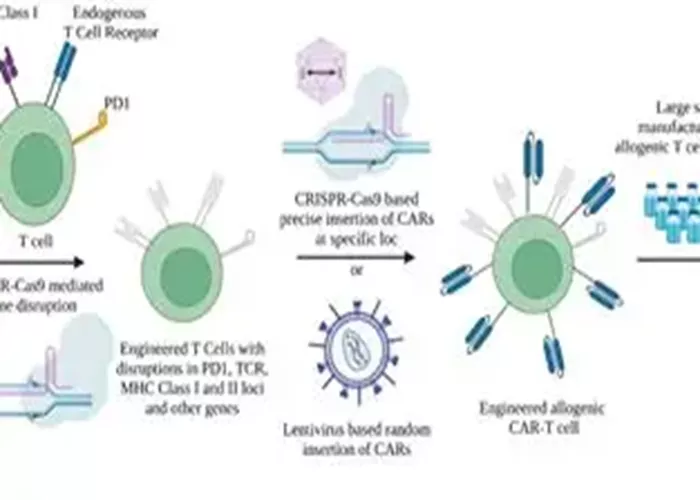
To overcome these challenges, the research team turned to the “gene – editing scissors” CRISPR – Cas12b technology. They genetically engineered the donor islet cells in a two – fold manner. First, they knocked out the B2M and CIITA genes. The B2M gene is involved in the presentation of antigens to the immune system, and CIITA plays a role in the expression of major histocompatibility complex class II molecules. By removing these genes, the team aimed to reduce the immunogenicity of the cells. Second, they used a lentivirus to over – express the CD47 gene. CD47 is known to act as a “do not eat me” signal to the immune system.
The resulting low – immunogenic engineered cells were then precisely implanted into the left brachioradialis muscle of a 42 – year – old patient. Notably, throughout the entire treatment process, no glucocorticoids, anti – inflammatory drugs, or immunosuppressants were administered.
Over the course of 84 days, the research team closely monitored the patient. The results were remarkable. The transplanted cells managed to evade the immune system’s detection and attack, with no signs of T – cell activation or antibody production. Imaging studies confirmed that the grafts were in good condition. Biochemically, the patient’s glycated hemoglobin level dropped significantly by 42%, indicating improved blood sugar control. Although the number of transplanted cells currently represents only 7% of the required amount for a full – fledged treatment, this proof – of – survival and function experiment has already achieved a crucial breakthrough.
The research team is optimistic about the future. They believe that the low – immunogenic gene – editing technology used in this study could potentially yield more curative β – cells. In the long run, this may lead to a diabetes treatment that does not require immunosuppression, sparing millions of patients from the daily burden of insulin injections and the long – term complications associated with the disease. As the research continues, it holds the promise of revolutionizing the treatment landscape for type 1 diabetes.
Related topics:
Novo Nordisk’s Semaglutide Shows Promise for Obesity, Heart Health
Key Findings: Rural Students Have Higher Depression Risk
Men’s Pelvic Health Awareness Grows with CC’s Physical Therapy
