
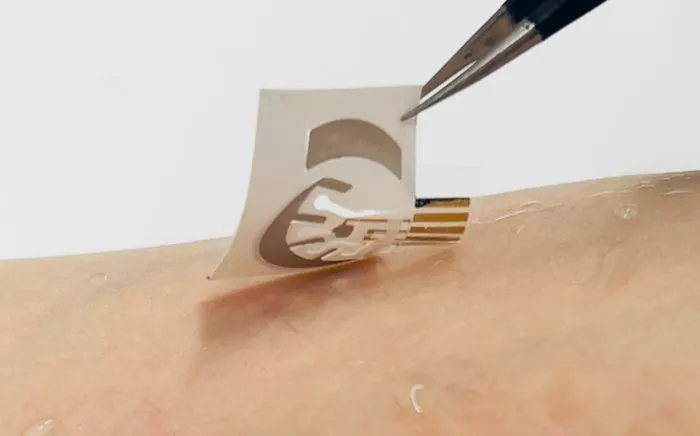
A new wearable sensor could change how people with bipolar disorder track their lithium medication levels. Instead of painful blood tests, this device uses sweat to measure lithium safely and quickly.
Researchers at the University of Southern California (USC) developed this small, non-invasive patch to help millions of patients who rely on lithium, a mood stabilizer. Lithium must be carefully monitored because too little won’t work, and too much can cause serious side effects like kidney or thyroid damage.
Currently, lithium levels are checked with regular blood draws that can be inconvenient and uncomfortable. The USC team found that sweat can be an easier way to track lithium because it can be collected without needles and gives real-time results.
Bipolar disorder affects about 5.7 million adults in the U.S., according to the National Institute of Mental Health.
Professor Yasser Khan from USC said, “Our wearable combines sweat collection and lithium measurement in one simple device. It works like a bandage on the skin and uses a safe electric current to make you sweat without exercise.”
The device sends lithium data to a smartphone app in minutes, so users can check their levels from home. The patch lasts about a week and only the small sensor part needs replacing, which is affordable.
Unlike glucose monitors for diabetes, which use needles under the skin, this sensor uses sweat and sticks to the skin like a sticker. It adds a step to create sweat first but avoids needles altogether.
The key technology inside is called an organic electrochemical transistor (OECT), designed specifically to detect lithium ions in sweat. The whole system—from sweat induction to smartphone display—was made using low-cost methods so it can be produced widely.
The device was tested on patients at the Keck School of Medicine and showed lithium levels that matched traditional lab tests. Patients liked being able to track their lithium at home instead of visiting labs for blood tests.
“One patient found a lithium level of 0.4 mM worked well for them,” Khan explained. “This kind of personal feedback helps doctors and patients adjust treatment better.”
The team hopes this device will make lithium treatment safer by helping prevent side effects and toxicity.
Khan said the technology is ready for the market but needs larger studies with more patients to confirm its benefits. They also plan to develop smarter versions that use AI to adjust lithium doses automatically.
Related topics:
