
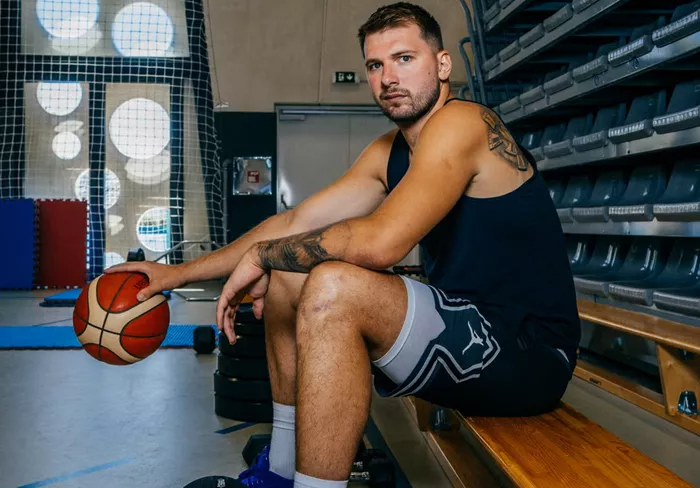
Luka Dončić, the newest superstar of the Los Angeles Lakers, is taking his offseason training to a new level. The 26-year-old guard has committed to intermittent fasting, a nutrition plan designed to reduce inflammation and improve recovery. This shift in lifestyle has helped him lose weight, build muscle, and feel better physically.
A New Approach to Fitness
Dončić began intermittent fasting in June, following a plan that restricts eating to a specific window each day. He fasts from 8:30 p.m. to 12 noon the next day—roughly 15 to 16 hours of fasting daily—except on Sundays.
During his eating window, he consumes two high-protein meals and a protein shake. This routine is timed around a daily 90-minute morning workout, which he completes before having his first bite of the day.
“I can see my body changing. Just visually, I would say my whole body looks better,” Dončić said in an interview with Men’s Health.
His discipline has impressed fans and critics alike, especially after reports that his former team, the Dallas Mavericks, were unhappy with his previous fitness level. Mavericks general manager Nico Harrison believed Dončić didn’t take his conditioning seriously. But now, Dončić seems to be proving those concerns wrong.
What Is Intermittent Fasting?
Intermittent fasting (IF) is a dietary approach that focuses more on when you eat than what you eat. Common IF schedules include fasting for 16 hours and eating during an 8-hour window, known as the 16:8 method—which is the method Dončić follows.
During fasting hours, no calories are consumed. Water, black coffee, and tea are generally allowed. The idea is to give the digestive system time to rest and promote processes like cellular repair, hormone balance, and fat burning.
Studies have shown that intermittent fasting can:
- Reduce chronic inflammation
- Improve insulin sensitivity
- Aid in weight loss and fat reduction
- Support muscle retention during training
- Enhance mental clarity and energy levels
These benefits are particularly attractive to elite athletes like Dončić, who rely on physical performance and rapid recovery.
Science Behind Fasting and Inflammation
One of the key reasons Dončić adopted intermittent fasting was to reduce inflammation—a hidden issue that can hinder recovery and increase the risk of injury.
When the body fasts, it triggers a process called autophagy, where cells clean out damaged components and regenerate. This has been linked to reduced inflammation and better metabolic health. Additionally, fasting periods allow insulin levels to drop, which can promote fat burning and better blood sugar control.
For high-performing athletes, managing inflammation is crucial. It can mean faster recovery after games, fewer muscle aches, and more consistent performance throughout a long NBA season.
What’s Next for Dončić?
Dončić enters the 2025–2026 season with career averages of 28.6 points, 8.6 rebounds, and 8.2 assists. That puts him third in NBA history for points per game, behind only Michael Jordan and Wilt Chamberlain.
With his renewed commitment to fitness, diet, and recovery, the Lakers are betting big on Dončić. If his offseason changes pay off, fans could see one of the most dominant versions of Dončić yet.
Conclusion
Luka Dončić’s adoption of intermittent fasting marks a turning point in his career. It’s more than a diet—it’s a sign of discipline, maturity, and a deep commitment to greatness. As he prepares for a new season with a stronger body and sharper focus, Dončić is poised to reach even higher levels in the NBA.
Related topics:
New Study Finds Intermittent Fasting Beats Calorie Counting for Weight Los
Intermittent Fasting May Help Prevent Blood Clots, Study Finds
Top 4 Multivitamins For Men On Intermittent Fasting: Nutrients You Need
