
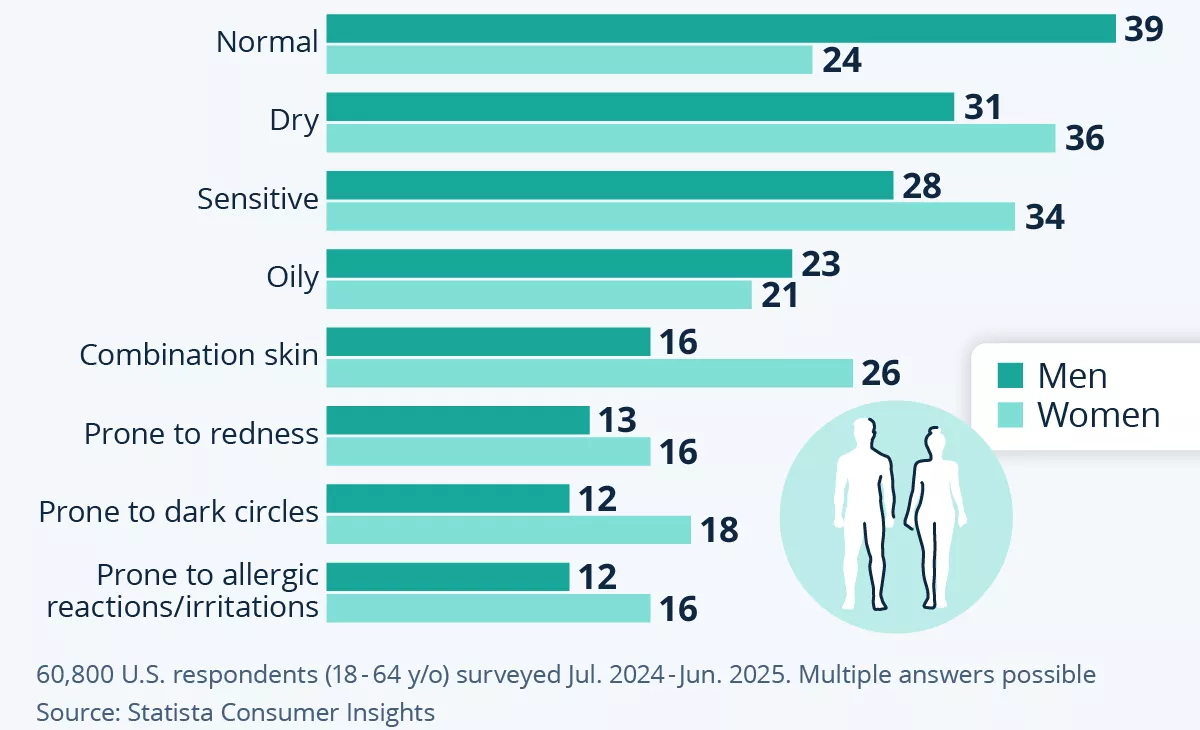
A notable gender divide has emerged in the U.S. regarding how people perceive their skin type, with men far more likely to describe theirs as “normal” compared to women, new data shows.
A recent survey conducted by Statista Consumer Insights reveals that 39% of men identify their skin type as “normal,” whereas only 24% of women do so. Conversely, women are more inclined to characterize their skin as “dry” (36%) or “sensitive” (34%) than men, among whom 31% report dryness and 28% sensitivity.
Disparities also extend to specific skin traits: Women are 50% more likely than men to experience issues like dark circles under the eyes, skin discoloration, or hyperpigmentation.
Experts note that biology alone doesn’t account for these differences. Perception, shaped heavily by social norms and advertising, plays a key role. Male skincare products are often marketed as “all-in-one” or “for all skin types,” while women’s skincare ads tend to highlight problem areas, imperfections, and the need for fixes. This dynamic leads women to form a more nuanced—and often harsher—view of their own skin.
While men are more likely to perceive their skin as “normal,” a consistent skincare routine tailored to individual needs can help maintain health, prevent issues, and enhance overall skin resilience. Here’s expert advice to elevate your routine:
1. Start with the Basics: Cleanse Wisely
Avoid harsh soaps: Many bar soaps and heavily fragranced cleansers strip the skin of natural oils, leading to dryness or irritation—even if you think your skin is “normal.” Opt for a gentle, pH-balanced facial cleanser (look for ingredients like hyaluronic acid or glycerin) to remove dirt, sweat, and excess oil without disrupting the skin barrier.
Wash twice daily: Once in the morning to refresh and remove overnight oils, and once at night to eliminate sunscreen, pollution, and grime from the day. Skip hot water, which can irritate; lukewarm is best.
2. Moisturize Daily—No Exceptions
Hydration matters for all skin types: Even “normal” skin needs moisture to stay balanced. Choose a lightweight, non-comedogenic (non-pore-clogging) moisturizer with SPF for daytime to protect against UV damage—a leading cause of aging and uneven tone.
Nighttime repair: Swap to a richer moisturizer or one with ingredients like niacinamide or ceramides at night to support skin repair while you sleep.
3. Don’t Neglect Sun Protection
UV rays don’t discriminate: Regardless of skin type, daily sunscreen (SPF 30+) is critical. Look for oil-free, fast-absorbing formulas labeled “for all skin types” to avoid greasiness. Reapply every 2 hours if outdoors, and don’t forget ears, neck, and the back of your hands.
4. Address Specific Concerns Proactively
Dark circles or dullness: Incorporate a vitamin C serum into your morning routine. It brightens skin, fades discoloration, and boosts collagen production.
Sensitivity or redness: Use products with calming ingredients like aloe vera, chamomile, or green tea extract. Avoid alcohol-based toners, which can irritate.
Excess oil: If you notice shine midday, blot with oil-absorbing sheets instead of washing—over-cleansing can trigger more oil production.
5. Shave with Care
Prep your skin: Soften facial hair with warm water (or a hot towel) before shaving to reduce tugging and irritation. Use a sharp, clean razor to avoid nicks and ingrown hairs.
Choose the right products: Skip aerosol shaving creams (often drying) in favor of a creamy shaving gel or oil to lubricate the skin. Follow up with an alcohol-free aftershave balm to soothe.
6. Watch Your Lifestyle Habits
Hydrate from within: Drink plenty of water—dehydration can make skin look dull and accentuate dryness.
Limit irritants: Smoking, excessive alcohol, and a diet high in processed foods can worsen inflammation and breakouts.
Prioritize sleep: Poor sleep disrupts skin repair, leading to dullness and increased sensitivity. Aim for 7–9 hours nightly.
By focusing on consistency and ingredients that suit your skin’s actual needs—rather than relying solely on perception—men can keep their skin healthy, balanced, and resilient.
READ MORE
