
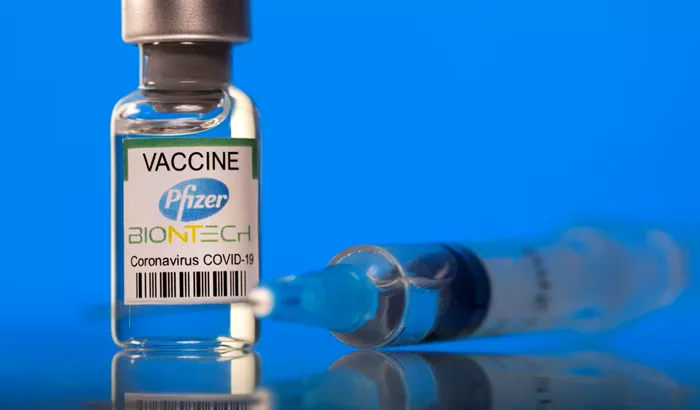
A recent peer-reviewed study has found that the Pfizer–BioNTech COVID-19 vaccine may lead to measurable changes in the structure of the human cornea, particularly its innermost layer—the endothelium. Published in the journal Ophthalmic Epidemiology, the study has sparked international discussion, especially among ophthalmologists and individuals with pre-existing eye conditions.
Conducted in Turkey, the research tracked 64 individuals (128 eyes total) who received both doses of the Pfizer mRNA vaccine. Using advanced imaging tools like Sirius corneal topography and Tomey EM-4000 specular microscopy, researchers measured various corneal parameters both before and after vaccination.
While no participants reported any immediate vision loss, the data revealed notable biological changes in the cornea’s endothelium—the critical inner layer responsible for maintaining clarity and fluid balance.
Key Findings: Thickness and Cell Count Declines
One of the primary observations was a 2.6% increase in corneal thickness, from 528 to 542 micrometers, suggesting subtle swelling or inflammation. More concerning was the 8% reduction in endothelial cell count, dropping from an average of 2,597 to 2,378 cells per square millimeter.
Although these values remain within normal safety limits for healthy individuals, the loss is significant enough to raise red flags, particularly for people with pre-existing corneal disorders, advanced age, or a history of eye surgery.
Additionally, the study recorded an increase in the coefficient of variation—a measure of irregularity in cell size—rising from 39 to 42. This implies heightened stress on the endothelial layer. The percentage of hexagonal-shaped endothelial cells, a marker of healthy corneal morphology, also dropped from 50% to 48%.
“These subtle changes suggest that the corneal endothelium may undergo transient stress or inflammation after receiving the Pfizer vaccine,” the researchers wrote.
Implications for People With Eye Conditions
While the changes observed in the study may be temporary and clinically insignificant for most healthy individuals, they could be serious for patients with low endothelial reserves—such as those who’ve undergone corneal transplants or have diseases like Fuchs’ endothelial dystrophy.
According to a report by the Daily Mail, researchers caution against panic or vaccine hesitancy. Instead, they recommend corneal monitoring in vulnerable populations, especially if further studies confirm longer-term endothelial decline.
“This study does not suggest stopping vaccinations,” said lead author Dr. Tugba Ozturk, “but it highlights the need for proactive ophthalmologic screening in high-risk patients.”
Expert Opinions and Context
Experts agree that mRNA vaccines like Pfizer’s have saved millions of lives globally and remain essential tools in preventing severe COVID-19 outcomes. However, as more time passes since their rollout, rare or long-term side effects—such as myocarditis, pericarditis, and now potential corneal effects—are coming to light.
“This research is intriguing but far from conclusive,” said Dr. Nisha Acharya, an ophthalmologist at the University of California, San Francisco, who was not involved in the study. “Larger, long-term studies are needed before drawing strong conclusions. That said, screening high-risk individuals makes sense.”
Stay Vaccinated, Stay Informed
While the study adds a new dimension to the safety profile of the Pfizer COVID-19 vaccine, it does not undermine the broader public health benefits of vaccination. As with any medical intervention, individual risk assessments are key, especially in populations with existing health concerns.
For most people, the benefits of vaccination far outweigh the risks. But for those with compromised eye health, consulting an eye specialist before or after vaccination may be a wise precaution—especially as the medical community works to learn more.
