
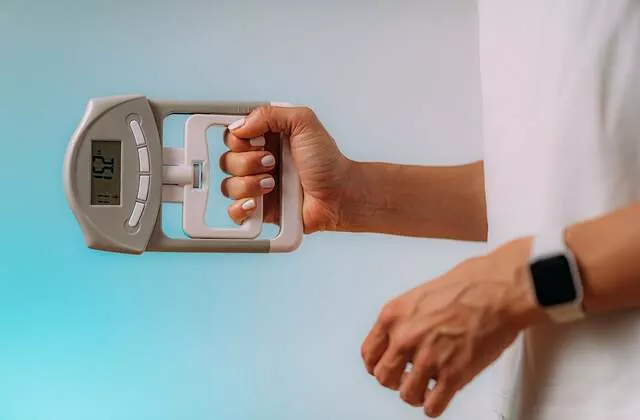
A simple measure like grip strength could provide valuable clues to early psychosis, a new study suggests.
Researchers have found that people recently diagnosed with psychosis often show weaker grip strength compared to those in good mental and physical health. The findings, published in the American Journal of Psychiatry, point to grip strength as a potential early indicator of this serious mental health condition.
“Poor grip strength has long been linked to negative health outcomes such as lower well-being, higher mortality risk, and reduced quality of life,” said Alexandra Moussa-Tooks, assistant professor of psychological and brain sciences at Indiana University. “But until now, its connection to brain function and early psychosis was not well understood.”
Psychosis typically begins with subtle changes in movement before progressing to more recognizable symptoms like hallucinations or paranoia. This study compared 89 individuals diagnosed with psychosis in the past five years to 51 healthy controls. Those with psychosis consistently showed weaker grip strength and lower well-being scores.
Brain imaging revealed that these issues were tied to three critical regions within the brain’s default mode network—a system active during rest or daydreaming. Stronger grip and better well-being correlated with greater connectivity among the anterior cingulate cortex, sensorimotor cortex, and cerebellum.
These findings suggest that declining grip strength may reflect changes in brain network function, known as resting-state functional connectivity. “Identifying these brain targets opens the door to new treatments,” said Dr. Heather Burrell Ward, assistant professor of psychiatry at Vanderbilt University Medical Center.
Possible interventions include magnetic stimulation to boost brain connectivity or physical exercise, which may strengthen brain networks indirectly. Moussa-Tooks used a powerful metaphor to explain the importance of focusing on early signs: “If psychosis is a house on fire, symptoms like delusions are the smoke. Treating the smoke alone isn’t enough—you have to find and stop the fire.”
Motor disturbances, such as weaker grip, provide a clearer window into the “fire” inside the brain. Because grip strength is easy to measure, it might serve as a practical early screening tool for psychosis and other mental illnesses.
“Simple motor tests are more straightforward than complex cognitive assessments,” Moussa-Tooks said. “They help us understand disruptions not only in movement but across brain systems that cause the complex symptoms we see in psychosis.”
Related topics:
