
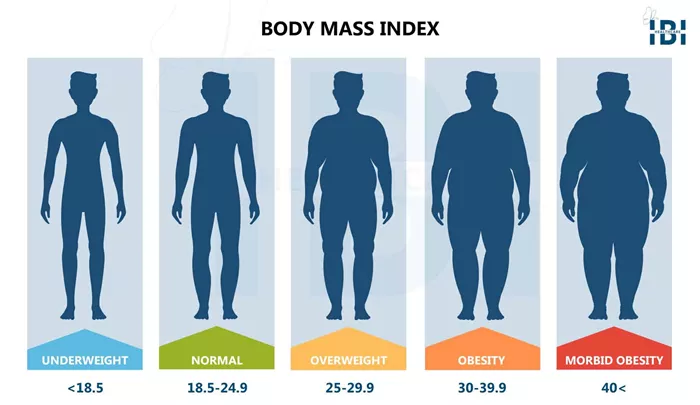
Body mass index, or BMI, has long been used by doctors to quickly assess whether someone is at risk for health issues due to weight. But a new study suggests this widely-used tool may not be the best way to judge future health risks—especially for younger adults.
BMI: A Flawed Measurement Tool
BMI is calculated by dividing a person’s weight by their height squared. While it’s simple and useful for large population studies, it doesn’t always give an accurate picture of individual health. That’s because BMI doesn’t distinguish between fat, muscle, or bone.
As a result, muscular people or those with larger frames may be wrongly classified as overweight or obese. On the other hand, people who have lost muscle—such as older adults—may seem healthy based on BMI, even if they’re not.
“There’s a major blind spot,” said researchers from the Harvard T.H. Chan School of Public Health. “BMI can mislead both patients and doctors.”
A Better Option: Bioelectrical Impedance Analysis (BIA)
Researchers say a different tool could offer a more accurate way to measure body health: bioelectrical impedance analysis (BIA). This method uses tiny, painless electrical currents to measure the body’s fat percentage, muscle mass, and water content.
Here’s how it works: You stand barefoot on a scale with metal plates and hold onto a metal handle. The device sends a weak current through your body. Since fat, muscle, and bone all conduct electricity differently, the machine can calculate what percentage of your body is fat versus lean mass.
This approach gives a far more detailed look at body composition than BMI ever could.
Study: Body Fat Percentage Predicts Death Risk Better Than BMI
The study, published in the Annals of Family Medicine, tracked adults aged 20 to 49 over 15 years. It found that body fat percentage was a stronger predictor of mortality risk than BMI in this age group.
Lead author Arch Mainous III, a professor at the University of Florida School of Medicine, said the data was clear: “People with a high percentage of body fat were 262% more likely to die from heart disease than those with healthy fat levels—even when their BMI looked normal.”
What’s most alarming, Mainous added, is that BMI completely missed this risk in many younger adults. “They looked fine on paper, but the BIA revealed hidden dangers.”
A New Way to Prevent Disease Early
Senior author Dr. Frank Orlando called these findings a “game-changer.” He said BIA could help spot risks earlier in life, giving doctors a chance to step in before serious disease develops.
“When you know someone’s body composition early on, you can intervene early,” Orlando said. “We could keep more people healthy long-term if we stop relying so much on BMI.”
Why BMI Is Still Used—and Where It Fails
BMI remains a common tool because it’s easy to use and has been shown to correlate with chronic diseases like cancer, diabetes, and heart disease—at the population level.
But on an individual basis, it often falls short. For example, someone could have a “normal” BMI but still carry dangerous internal fat around organs. This type of fat, sometimes called “visceral fat,” increases the risk of liver disease, high blood pressure, high blood sugar, and systemic inflammation.
“These people are often overlooked because their BMI says they’re fine,” Mainous explained. “But the risks are very real.”
The study’s message is clear: We need better tools than BMI if we want to spot problems before they become deadly.
Related topics:
