
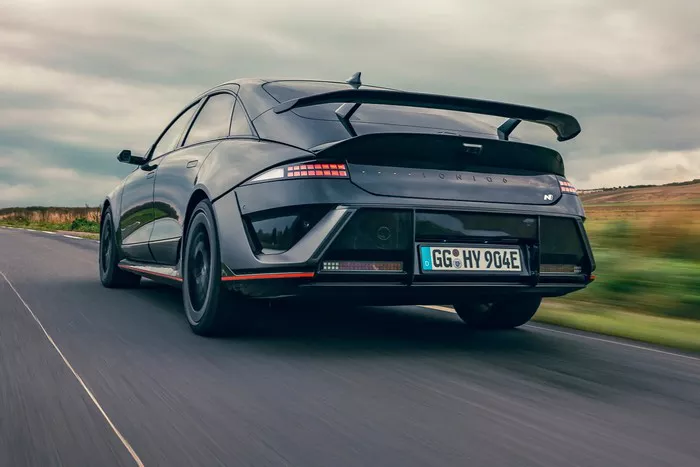
Hyundai has provided an early look at a new China-exclusive addition to its IONIQ electric vehicle lineup, marking a strategic push to strengthen its position in the world’s largest electric vehicle market and compete more directly with leading domestic manufacturers such as BYD.
The initiative builds on the recent debut of two concept models in Beijing — the IONIQ Earth and IONIQ Venus — which serve as the foundation for Hyundai’s localized EV strategy. The Earth concept is designed as a family-focused SUV, while the Venus is a sleek sedan aimed at younger, technology-oriented consumers seeking a more connected driving experience.
Both models are scheduled to make their production-ready debut at the Beijing Auto Show on April 24, where Hyundai is also expected to present its broader electrification plans for China. According to Li Fenggang, president of Beijing Hyundai, the upcoming vehicles will prioritize advanced smart driving technologies alongside upgraded in-cabin digital features tailored specifically to Chinese consumers.
Unlike Hyundai’s global IONIQ lineup, which includes models such as the IONIQ 5 and IONIQ 9, the China-specific range introduces a distinct design direction under the company’s “Lead, don’t follow” philosophy. A key visual hallmark of this approach is a “single-curve silhouette,” intended to give the lineup a unified and recognizable identity within Hyundai’s expanding electric portfolio.
Early indications suggest the transition from concept to production is already well underway. A camouflaged prototype of the Venus sedan has been observed during road testing, signaling that much of its original design language will be retained. Among the most notable features are ultra-slim LED headlights connected by a full-width light bar, reinforcing a futuristic styling direction.
Hyundai has also confirmed that its China-market IONIQ models will adopt a new planetary naming system, reflecting a broader design and branding philosophy centered on enhancing the overall driving and ownership experience. This naming strategy is intended to further differentiate the lineup within an increasingly crowded EV segment.
Inside the cabin, the upcoming models are expected to feature Hyundai’s Pleos Connect system, an Android-based infotainment platform designed to deliver smartphone-like functionality and seamless connectivity. The system is part of Hyundai’s effort to close the technology gap with Chinese EV makers, who are widely recognized for their advanced in-car software ecosystems.
Further details on the production versions of the Earth and Venus models are expected during Hyundai’s presentation at the Beijing Auto Show, where the company will outline its strategy for navigating China’s highly competitive and rapidly evolving electric vehicle landscape.
