
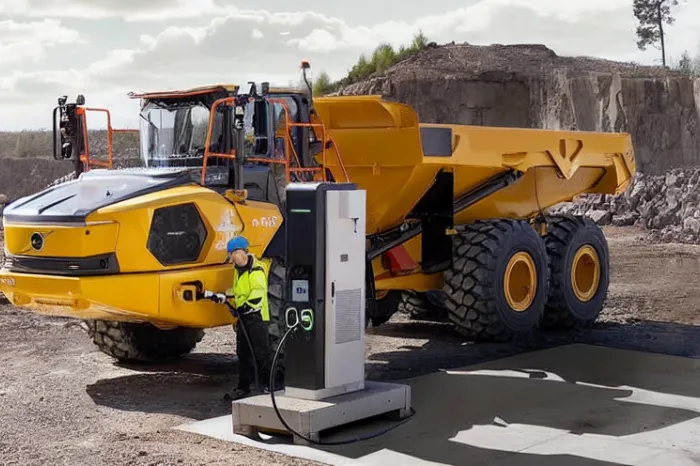
Volvo Construction Equipment (Volvo CE) has reached a significant milestone by beginning the serial production of its electric articulated haulers, the A30 Electric and A40 Electric, at its Braås facility in Sweden. This development marks the first time electric articulated haulers of this size are being produced on a commercial scale. The A30 Electric offers a payload capacity of 29 tonnes, while the A40 Electric can carry up to 39 tonnes. Both models are designed to operate for up to six hours on a single battery charge, depending on the specific application.
The Braås site holds historical importance for Volvo CE as it was where the company first built Gravel Charlie, the world’s first articulated hauler, back in 1966. More than sixty years later, the same facility is now producing these advanced electric machines, symbolizing both Volvo’s rich engineering heritage and its commitment to innovation in sustainable construction equipment.
Articulated haulers are commonly used in demanding environments such as quarrying and mining, where machines run continuously and consume large amounts of diesel fuel. By introducing electric models, Volvo aims to reduce emissions significantly while also providing cost-saving benefits related to total ownership. The move to electrification reflects growing customer interest and readiness for zero-emission solutions in heavy-duty industrial applications.
Initial deliveries of the A30 Electric and A40 Electric are scheduled for customers in the United Kingdom and Norway within the coming weeks. Additional orders will be fulfilled for selected customers across Europe during the latter half of 2026. Volvo CE President Melker Jernberg emphasized that this production start is proof that electric technology is ready for heavy, high-productivity work, and that meaningful change toward sustainability is underway.
Alongside these advances in electric vehicles, Volvo is also progressing with hydrogen technology. The company has commenced on-road testing of its hydrogen-powered trucks as part of a broader strategy to decarbonize transportation. Volvo plans to introduce its hydrogen truck solution commercially in Europe before 2030, expanding its portfolio of low-emission vehicles beyond battery-electric options.
Volvo’s commitment to both battery-electric and hydrogen technologies highlights its dual approach to transforming the transport and construction industries. The company aims to meet diverse customer needs and environmental goals by offering a range of sustainable vehicle solutions. This strategic expansion supports Volvo’s ambition to lead industrial transformation while reducing carbon footprints across multiple sectors.
