
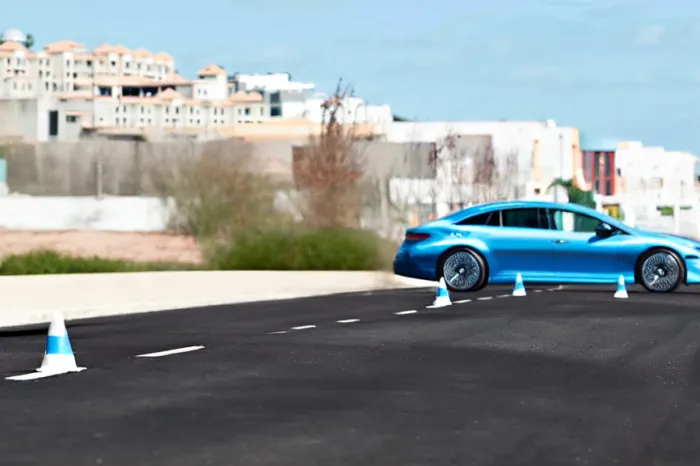
Mercedes-Benz is set to pioneer steer-by-wire technology among German automakers with the introduction of this advanced system on the facelifted 2027 EQS electric sedan. This new steering technology removes the traditional mechanical connection between the steering wheel and the front wheels, replacing it with electronic signals that control wheel movement. This innovation allows for a variable steering ratio that adapts to different driving conditions, improving responsiveness at low speeds for parking and enhancing stability on highways.
The steer-by-wire system has undergone extensive testing, including over one million kilometers on test benches and public roads. It features a highly redundant architecture with dual signal paths and multiple actuators, along with a backup power supply. In rare cases of primary system failure, the vehicle can still be controlled using rear-axle steering and selective braking, ensuring safety and reliability.
Alongside this technology, Mercedes is introducing a new flat-bottomed yoke steering design, replacing the traditional round wheel. This yoke preserves the familiar 3 o’clock and 9 o’clock hand positions but offers improved legroom and better visibility of the instrument cluster. The design aims to enhance driver comfort, especially when paired with Mercedes’ SAE Level 3 conditional automated driving system, allowing drivers to relax more while still maintaining control when needed.
The EQS’s steer-by-wire system also integrates with an enhanced rear-axle steering feature capable of rotating up to 10 degrees in either direction. This combination improves directional stability, agility, and minimizes vibrations from uneven road surfaces. The yoke’s limited rotation—only 170 degrees at low speeds—eliminates the need for hand-over-hand steering, a common challenge in previous yoke designs.
Mercedes’ approach to steer-by-wire includes multiple safety measures inspired by aerospace protocols. The system uses separate CPUs and hardware components to prevent common failure modes, along with a third set of sensors to verify steering inputs. If any fault is detected, the car automatically limits speed and allows enough distance for a safe stop. In addition, rear-wheel steering assists in maintaining control if the main system becomes compromised.
Early driving impressions note that while the EQS’s large size and weight present challenges in handling, the steer-by-wire system combined with rear-wheel steering offers a more precise and responsive experience than traditional setups. Drivers will experience reduced arm movement during maneuvers and enhanced control precision. However, some caution that adapting to the new yoke style may take time for many drivers.
This technology rollout begins with the EQS but is expected to extend to future Mercedes models including the new S-Class and even some internal combustion engine vehicles. Mercedes joins other manufacturers like Tesla, Lexus, GMC, Rolls-Royce, and Lotus in adopting steer-by-wire systems. While opinions on the aesthetic design of Mercedes’ yoke are mixed, experts agree that steer-by-wire represents a significant step forward in automotive steering technology.
The updated EQS with optional steer-by-wire will go on sale later this year in the U.S., with pricing details forthcoming. As Mercedes leads this shift towards a post-steering-column future, it sets new standards for safety, adaptability, and driver experience in luxury electric vehicles.
