
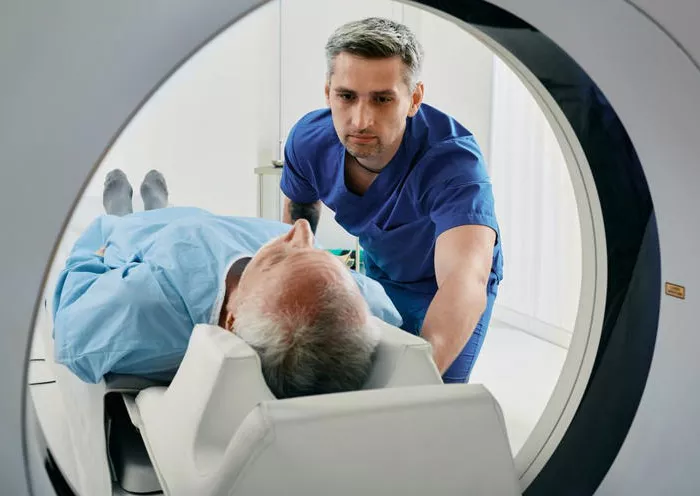
A new large-scale study suggests that the widespread use of computed tomography (CT) scans in the United States could contribute to more than 100,000 cancer cases over the lifetimes of patients.
The research, titled “Projected Lifetime Cancer Risks From Current Computed Tomography Imaging,” was published in the medical journal JAMA Internal Medicine. The study was led by Rebecca Smith-Bindman, a professor of epidemiology and biostatistics at University of California, San Francisco.
According to the findings, about 61.5 million Americans underwent roughly 93 million CT scans in 2023. Slightly more women than men received the scans, accounting for 53 percent of patients, while adults made up the vast majority of cases at 95.8 percent.
CT scans are widely used in modern medicine because they provide detailed images of the body that help doctors diagnose injuries and diseases. However, the technology relies on ionizing radiation, the same type used in traditional X-rays but often at significantly higher doses.
For example, a standard chest X-ray exposes a patient to radiation roughly equal to what a person naturally receives from the environment over about 10 days. In contrast, a CT scan can deliver hundreds of times more radiation, which is roughly equivalent to two years of background radiation exposure.
Based on current usage patterns, the researchers estimated that around 103,000 cancers could eventually develop as a result of radiation from these scans. The most commonly projected cancers include lung cancer, colon cancer, leukemia, and bladder cancer. Among women, breast cancer was identified as the second most common potential outcome.
The study warns that if present imaging practices and radiation doses remain unchanged, cancers linked to CT scans could eventually account for about 5 percent of all new cancer diagnoses each year.
Smith-Bindman said the estimates could also provide insight into potential risks in other countries. Using rough calculations, she noted that similar trends could apply to Canada. In 2022, approximately 6.4 million CT scans were performed in Canada, which could translate into around 7,200 additional cancer cases over the lifetimes of those patients.
Researchers emphasize that CT scans remain an important diagnostic tool in modern healthcare. However, they say the findings highlight the need to carefully evaluate when scans are necessary and to minimize radiation exposure whenever possible.
