
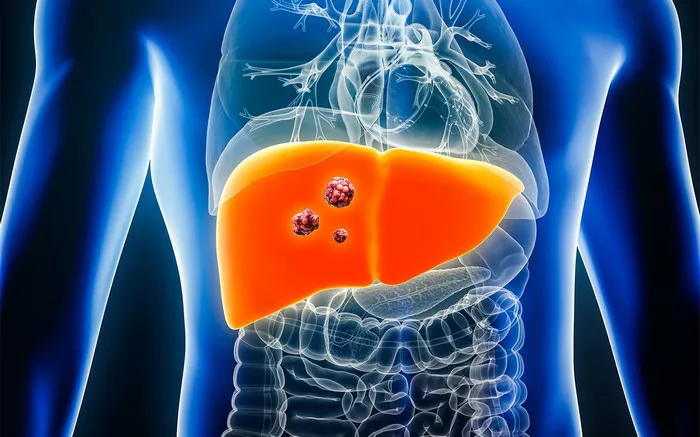
A new study suggests that reducing protein intake may help slow the growth of liver cancer in individuals whose livers are unable to properly process metabolic waste.
Researchers from Rutgers University found that mice fed a low-protein diet developed smaller liver tumors and experienced fewer cancer-related deaths. The findings, published in Science Advances, highlight how impaired ammonia processing in the liver can unintentionally create conditions that promote tumor growth.
Liver Cancer Remains a Major Health Threat
Liver cancer is one of the deadliest forms of primary cancer in the United States. The disease carries a five-year survival rate of about 22 percent. According to the American Cancer Society, an estimated 42,240 new cases were expected in 2025, with approximately 30,090 deaths.
Beyond diagnosed cancers, millions of people live with liver conditions that significantly increase their risk. Fatty liver disease affects roughly one in four adults in the United States. Along with viral hepatitis and excessive alcohol consumption, it can lead to cirrhosis, a condition that greatly increases the likelihood of liver cancer.
“If you have liver disease or damage that prevents your liver from functioning correctly, you should seriously consider reducing your protein intake to lower the risk of developing liver cancer,” said Wei-Xing Zong, senior author of the study and a distinguished professor at the Rutgers Ernest Mario School of Pharmacy. Zong is also a member of the Cancer Metabolism and Immunology Program at the Rutgers Cancer Institute, the state’s only National Cancer Institute-designated Comprehensive Cancer Center.
How Protein Breakdown Produces Toxic Ammonia
Protein is an essential nutrient, but its metabolism produces nitrogen as a byproduct. This nitrogen can be converted into ammonia, a compound that is toxic to the brain and other organs if it accumulates in the body.
Under normal conditions, the liver quickly neutralizes ammonia by converting it into urea. The urea is then safely eliminated through urine.
However, this process can become impaired in people with liver disease or liver cancer.
“The clinical observation that the liver’s ammonia-handling machinery is usually impaired in liver cancer patients is decades old,” Zong said. “The question that has remained unanswered until now is whether this impairment and the resulting ammonia buildup are a consequence of the cancer or a driver of the tumor growth.”
Researchers Test the Link Between Ammonia and Tumor Growth
To explore whether ammonia buildup contributes to cancer development, the researchers conducted experiments in mice.
The team first induced liver tumors in mice whose ammonia-processing systems were functioning normally. They then used gene-editing techniques to disable key enzymes responsible for breaking down ammonia in a subset of the animals. Other mice retained normal metabolic function.
The results showed a striking difference between the two groups. Mice that could not properly process ammonia accumulated significantly higher levels of the toxin. These animals developed larger tumors and died much sooner than mice with intact ammonia-clearing systems.
Further investigation revealed how the excess ammonia supported tumor growth. Instead of remaining as waste, the compound was incorporated into molecules that cancer cells rely on to multiply.
“The ammonia goes into amino acids and nucleotides, both of which tumor cells depend on for growth,” Zong explained.
Low-Protein Diet Slows Tumor Growth in Mice
After identifying this metabolic mechanism, the researchers tested whether dietary changes could reduce ammonia production.
Because ammonia originates from protein metabolism, the team placed some mice on a diet with reduced protein content. The results were notable. Mice on the low-protein diet developed tumors that grew significantly more slowly than those in animals consuming normal amounts of protein. The low-protein group also lived longer.
For people with healthy liver function, consuming higher levels of protein typically does not pose a problem because the liver efficiently converts ammonia into urea. However, individuals with liver disease may not be able to perform this process effectively.
Diet Changes Should Be Guided by Medical Advice
Despite the promising findings, experts emphasize that dietary adjustments should be approached carefully. Many cancer treatment plans recommend adequate or even increased protein intake to prevent muscle loss and maintain physical strength during therapy.
Zong noted that dietary recommendations should be tailored to each patient’s condition and liver function. For individuals whose livers struggle to eliminate ammonia, reducing protein intake could potentially become part of a broader strategy to manage liver cancer risk or progression.
The researchers say further studies in humans will be necessary to determine how dietary protein levels may influence liver cancer outcomes in patients with chronic liver disease.
