
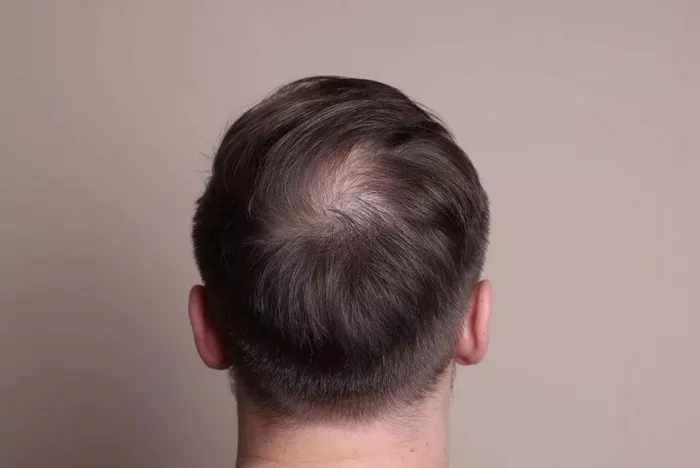
Scientists have achieved a major milestone in regenerative medicine by successfully growing fully functional hair follicles in a laboratory setting, a development that could pave the way for more effective treatments for hair loss in the future.
The findings, published in the journal Biochemical and Biophysical Research Communications, mark the first time researchers have been able to recreate hair follicles in vitro that not only form correctly but also demonstrate the biological characteristics needed to support natural hair growth cycles. The achievement offers new insights into the complex cellular interactions required to regenerate hair follicles and could eventually lead to innovative therapies for millions of people experiencing hair loss worldwide.
Hair loss has long remained a challenging medical and cosmetic issue, affecting individuals across different age groups and demographics. Although treatments such as medications, hair transplants, and regenerative therapies exist, none have yet delivered a permanent and scalable solution. Researchers have therefore been exploring ways to bioengineer hair follicles outside the human body, but previous attempts faced major limitations.
Earlier studies typically relied on two primary cell types: epithelial stem cells, which are responsible for producing hair shafts, and dermal papilla cells, which provide essential growth signals. While these combinations could initiate follicle-like structures, the resulting follicles often failed to complete normal growth cycles or properly integrate with surrounding tissues when grown in laboratory conditions.
The new study addressed this limitation by identifying a crucial missing component in the follicle development process. Researchers discovered that a third cell type, known as accessory mesenchymal cells, plays a vital role in forming the structural environment needed for fully functional hair follicle development. By incorporating these cells during the earliest stages of follicle formation, scientists were able to recreate hair follicles capable of progressing through the natural phases of the hair growth cycle.
According to the research team, the discovery represents a key advancement in understanding how complex biological structures can be reconstructed outside the body. In their published findings, the scientists wrote that the study “provides significant contributions to the basic and medical science of adult organ-inductive potential stem cells and their niches in organ morphogenesis and the adult hair cycle.”
Central to the breakthrough is what researchers describe as a “three-cell recipe” for successful hair follicle engineering. The process involves combining epithelial stem cells, dermal papilla cells, and accessory mesenchymal cells in carefully controlled laboratory conditions. Each of these cell types performs a specific role within the follicle structure: epithelial cells form the hair shaft, dermal papilla cells regulate growth signals, and mesenchymal cells create the supportive structural framework necessary for proper development.
The identification of this three-cell interaction highlights how complex tissue systems depend on multiple cellular components working together. The findings also challenge earlier assumptions that mesenchymal cells played only a secondary role in follicle development.
The research team emphasized that further work will focus on better understanding the lineage and function of mesenchymal cells within the hair follicle microenvironment. In the study, the scientists noted that future investigations aim to clarify “the lineage around bulge mesenchymal cells and their roles in hair follicle development and the hair cycle in vivo,” while also working toward regenerative models that could eventually be adapted for human use.
Beyond hair restoration, the implications of the discovery extend into the broader field of regenerative medicine. Successfully recreating hair follicles in the laboratory demonstrates the potential to engineer complex organ-like structures using coordinated cellular interactions. Such approaches could ultimately contribute to advances in tissue engineering and the development of regenerative treatments for other organs.
Yoshio Shimo, CEO of OrganTech, described the research as an important step toward organ-level regenerative medicine. He explained that the work establishes a foundational cellular configuration required for functional hair follicle regeneration and reinforces the importance of precisely coordinated epithelial and mesenchymal interactions when reconstructing stable biological tissues.
While the results are promising, scientists caution that significant challenges remain before the technology can be applied to human patients. The experiments conducted so far have primarily been tested using mouse models, and translating these findings to human hair follicle regeneration will require extensive additional research.
One of the key hurdles involves successfully growing human hair follicles in vitro and ensuring they can survive and function properly once transplanted into human skin. Researchers will need to refine the process further, improve scalability, and demonstrate long-term safety and effectiveness before clinical trials can begin.
Despite these obstacles, experts say the discovery provides a crucial scientific foundation that could guide future breakthroughs in hair restoration technologies. By revealing the cellular architecture required to generate functional hair follicles, the study offers a blueprint for researchers working to develop regenerative solutions for hair loss.
The research team plans to continue advancing their work using humanized experimental models, which may eventually help bridge the gap between laboratory success and real-world medical applications.
Although practical treatments based on this technology are still some distance away, the successful creation of fully functional hair follicles in the laboratory represents a significant step forward. For millions of people affected by hair loss, the findings offer new hope that regenerative medicine could one day deliver more permanent and biologically natural solutions.
