
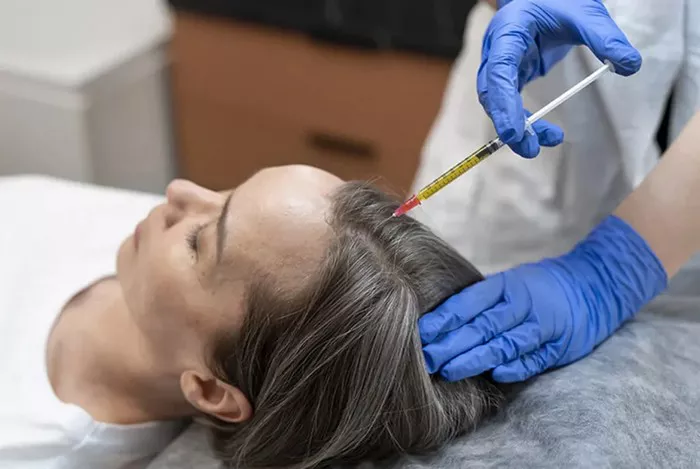
Women are accounting for an increasing share of hair restoration consultations worldwide, exposing a growing gap between traditional clinical training and the realities of modern patient presentations.
According to the International Society of Hair Restoration Surgery (ISHRS), the rise in female consultations reflects greater patient awareness and recognition that female hair loss is medically distinct from classical male-pattern baldness.
Dr. Kashmal Kalan, Medical Director at Alvi Armani, explains that historical surgical restoration techniques were primarily developed for men, leaving female hair loss as one of the least explored areas of restoration medicine.
“Hair restoration was built around male pattern baldness, which typically follows predictable recession and crown-thinning patterns,” Dr. Kalan says. “Female hair loss, by contrast, is often diffuse, hormonally influenced, and linked to broader metabolic and endocrine factors.”
The Limits of Transplant-Only Approaches
Experts caution that relying solely on surgical intervention without thorough diagnostic assessment can undermine restoration outcomes. Male hair loss is usually localized, whereas female hair loss often appears as distributed thinning, associated with physiological changes such as postpartum shedding, menopause-related hormonal shifts, thyroid disorders, or nutritional deficiencies.
“Transplanting onto actively unstable scalp tissue can reduce graft survival and long-term density,” Dr. Kalan warns. “Many female patients are still told their hair loss is stress-related without proper medical evaluation. Effective treatment must start with understanding the biological cause.”
Precision Restoration is Redefining Surgical Standards
Hair restoration is moving away from procedure-volume metrics toward personalized reconstruction. Female hair transplantation often requires meticulous microsurgical control of follicle angle, spacing, and density to achieve natural movement and visual continuity.
Unlike many male procedures, a significant proportion of female patients prefer methods that avoid shaving the recipient area, increasing demands for surgical planning and precision.
“The future of hair restoration is not about the number of follicles transplanted. It’s about how naturally the hair behaves after treatment,” Dr. Kalan notes.
Training Models Must Evolve
The growing prevalence of female hair loss is prompting calls for integrated diagnostic pathways linking dermatology, endocrinology, and surgical restoration. Multicultural variations in hair biology are also highlighting the limitations of standardized restoration protocols.
Improved patient education and access to specialists are shifting expectations toward long-term, biologically informed treatment rather than purely cosmetic procedures.
Toward a Diagnostic-First Approach
Experts predict the next era of hair restoration will combine surgical expertise with hormonal assessment, dermatological care, and regenerative therapies. In some patients, treatments such as platelet-rich plasma (PRP) or medical stabilization therapy may be recommended prior to surgery.
“The future of hair restoration will be defined not by surgical technique alone, but by understanding hair loss as a dynamic medical condition rather than a fixed cosmetic problem,” concludes Dr. Kalan. “Clinics that embrace gender-specific diagnosis and integrated care will lead the field.”
