
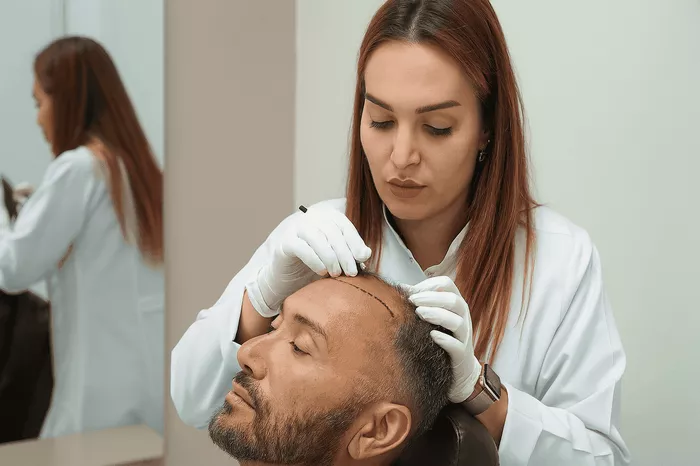
Young men are increasingly seeking medical advice for hair loss—an issue once associated primarily with middle age. Today, dermatology and hair restoration clinics report a noticeable rise in patients in their early and mid-twenties, reflecting a shift driven by cultural attitudes, digital visibility, and advances in treatment options.
According to Dr. Abhishek Pilani, founder of Assure Clinic and a specialist in hair transplant and restoration, the trend represents both a clinical and generational change.
“Today’s generation does not wait for hair loss to progress significantly,” he says. “They are more aware, more informed, and more willing to seek solutions early. Hair restoration is increasingly viewed as preventive planning rather than crisis management.”
Social Media and the Visibility Factor
Experts say constant digital exposure is one of the most significant drivers behind this shift. Growing up in an era of high-resolution cameras, video calls, and social media has made appearance more visible—and more scrutinized—than ever before.
“Digital exposure has amplified self-awareness,” Dr. Pilani explains. “When appearance is documented daily, even early signs of hair thinning can impact confidence.”
Unlike previous generations, who may have accepted hair loss as inevitable and delayed treatment, younger individuals tend to research options early and take a proactive approach.
Advances in Modern Hair Restoration
Medical advancements have also played a role in reducing hesitation around treatment. Procedures such as Follicular Unit Extraction (FUE) are minimally invasive and designed to deliver natural-looking results with shorter recovery periods.
“Modern FUE techniques allow us to extract and implant follicles with precision,” Dr. Pilani notes. “When performed appropriately and on the right candidate, results can be subtle and long-lasting.”
Greater transparency in marketing, including before-and-after case studies and improved clinical standards, has further helped reduce stigma surrounding hair restoration procedures.
Hair Loss Treatment as Preventive Self-Care
Specialists point to a broader cultural trend: younger adults are investing in grooming, fitness, and aesthetic care earlier than previous generations. Addressing hair loss is increasingly seen as part of a wider self-care routine rather than a reactive measure.
“Treating hair loss at an early stage often leads to better graft survival and more natural density,” says Dr. Pilani. “It also allows for long-term planning, especially when combined with medical therapy to stabilize ongoing hair fall.”
Experts Urge Careful Medical Assessment
Despite growing interest, professionals caution against rushing into surgical solutions without proper evaluation. Hair loss patterns can continue to evolve before age 30, making long-term planning essential.
“Not every young individual with hair thinning is an ideal transplant candidate,” Dr. Pilani emphasizes. “Stabilizing hair loss and evaluating future progression is critical. The choice must be medical, not merely emotional or social.”
A Generational Shift in Perspective
For younger generations, early intervention is less about vanity and more about maintaining confidence and control in a highly visible world. As awareness, technology, and cultural attitudes continue to evolve, experts expect demand for early-stage hair loss consultation and treatment to grow.
