
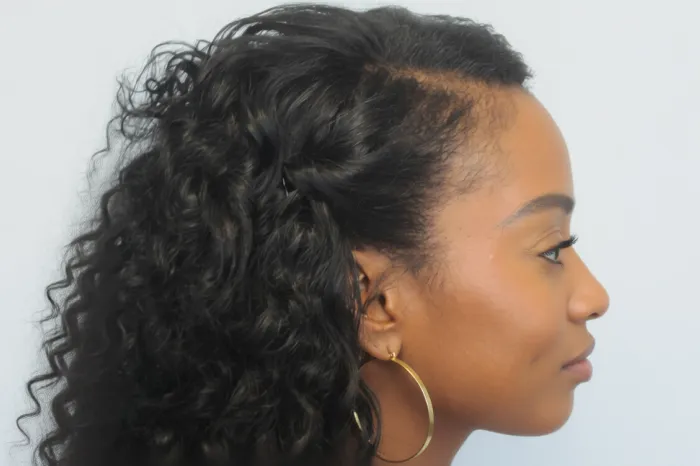
Hair transplantation is increasingly viewed as corrective medicine rather than a cosmetic procedure, according to Dr Kgoale Moabelo, who has focused her practice on treating hair loss among African patients. For Dr Moabelo, restoring hair is about repairing lasting damage, often caused by hairstyles and practices that have become common in many African communities. She began her medical career as a general practitioner, then shifted to hair restoration after witnessing advanced techniques abroad and seeing a lack of services for Afro-textured hair in her home country.
Afro-textured hair presents special challenges in transplantation due to its unique curly structure under the scalp. Recognizing this, Dr Moabelo sought out advanced training internationally, learning specifically about Afro hair from Dr Christian Busanga in Belgium. In February 2022, she opened her clinic, VYTA Aesthetics, to provide hair transplantation and medical scalp care designed for African hair types. She emphasizes that transplantation is a last resort for permanent damage, while many other types of hair loss can benefit from medical solutions.
One of the main conditions Dr Moabelo treats is traction alopecia — hair loss caused by repeated pulling from styles such as braids, tight ponytails, weaves, and the use of wigs and glue. She estimates that almost all cases of African hair loss stem from these styling choices. Over the last two decades, this pattern has worsened, with more women and even teenagers experiencing traction alopecia. A study led by Dr Nonhlanhla Khumalo from Groote Schuur Hospital and the University of Cape Town supports these concerns, showing that adults suffer more from braiding-related hair loss than children, and severity increases with age and certain hairstyles.
Many people mistakenly believe that hair loss is simply genetic or that braiding is necessary for hair to grow. Dr Moabelo counters these myths, explaining that so-called protective styles can cause harmful tension on the hair roots. Early signs of traction alopecia, such as redness, tenderness, itching, and breakage, are often ignored. However, if detected soon and damaging practices are stopped, hair can recover. Once the follicles are scarred after years of tension, transplantation may be the only option.
The surgical process involves carefully extracting healthy hair follicles and implanting them in the scarred areas, following the natural curl and direction of Afro hair. Despite the effectiveness of transplantation, Dr Moabelo stresses that prevention is always preferable. She urges people to take simple steps to keep their scalp healthy, such as avoiding harsh products, gentle cleansing, and regular massages. Her central message is to appreciate natural Afro hair and learn how to care for it, believing that education can break the cycle of hair loss for future generations.
