
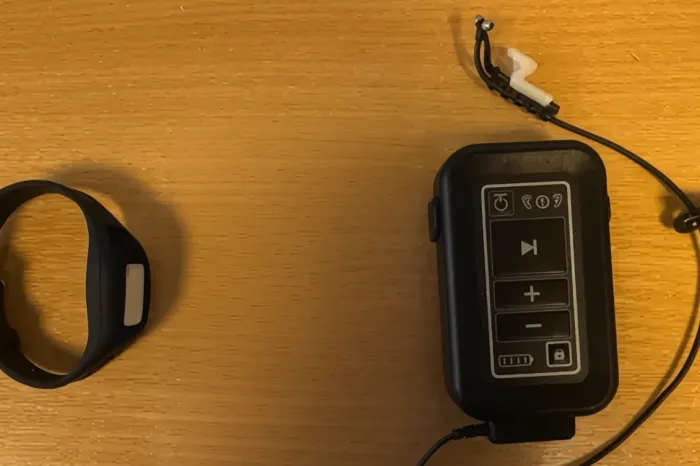
A nationwide trial in the United Kingdom is testing a new at-home device that aims to help stroke survivors regain movement in their arms and hands. The program, led by Sheffield Teaching Hospitals NHS Foundation Trust and the University of Sheffield, is considered the largest study of its kind for brain stimulation and stroke recovery, with hopes to improve rehabilitation outcomes for hundreds of survivors.
Amanda James-Hammett, who suffered a stroke at the age of 37, lost the ability to speak and move her right arm. After years of rehabilitation, she joined the trial and used the device designed to stimulate the vagus nerve—a major nerve connecting the brain and the abdomen—while performing daily exercises. Unlike previous forms of nerve stimulation which required surgery, this new device sits comfortably in the ear and is non-invasive, making it easy for users to operate from their own homes. Amanda shared that the device gave her freedom and helped her regain skills, such as sewing, which she once thought were lost forever.
According to neurologist Dr Sheharyar Baig, stroke remains the leading cause of adult-onset disability in the UK, affecting roughly 100,000 people annually. Many survivors have ongoing difficulties with arm weakness, which can make simple tasks like dressing and cooking challenging. Finding accessible solutions that allow people to continue rehabilitation at home is vital to alleviate the strain on hospital and social care services.
The device works by sending gentle electrical pulses to the vagus nerve during rehabilitation exercises. Participants in the Triceps trial use it for about an hour daily over several weeks. Results so far show promising improvements in arm function for many involved, although researchers are still assessing full outcomes. The Stroke Association is closely monitoring the study and investigating which patients benefit most and why.
Dr Baig emphasized that this treatment is not a cure but may help stroke survivors gain more independence in daily life. Early feedback indicates that participants have been able to perform tasks they previously could not, such as carrying a cup of tea or achieving personal walking milestones. The technology is affordable, simple to use, and can fit easily into existing rehabilitation programs. For many, the ability to perform everyday activities independently again is the greatest reward.
