
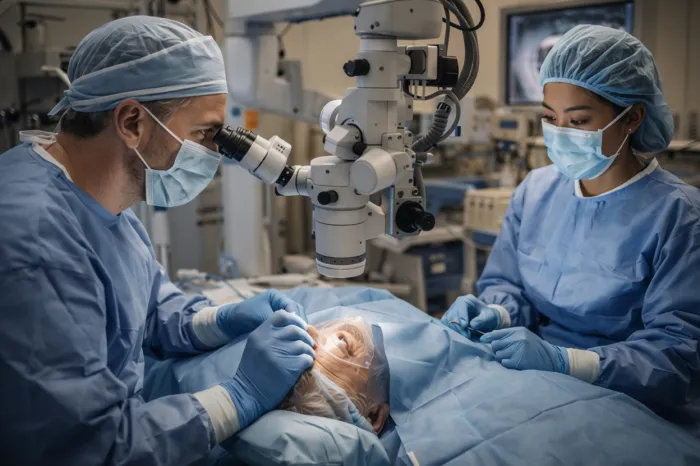
Eye surgery is taking center stage as health organizations and experts push for better treatments and wider access to care for vision problems and eye diseases. Cataracts, one of the most common causes of blindness worldwide, remain a major concern, especially for older adults. While new technologies and surgical techniques promise better outcomes, challenges persist in ensuring that everyone benefits from advances in eye care.
Over recent years, the medical field has seen significant growth in minimally invasive eye surgeries. Minimally invasive glaucoma surgery (MIGS), using tiny devices just a millimeter wide, has been increasingly used to help people with glaucoma preserve their vision. Specialists at leading centers such as the John A. Moran Eye Center in Utah focus on personalized treatment, choosing procedures that best fit each patient’s needs and conditions.
Cataract surgery is another key topic as cataracts continue to affect millions, especially those over age 50. According to the World Health Organization (WHO), about 94 million people globally suffer from vision loss due to cataracts that could be reversed with surgery. However, access to high-quality, safe surgery is still a challenge in many parts of the world, particularly in lower-income countries. In response, WHO and partners have issued new guidelines aimed at raising both the quality and coverage of cataract surgeries. These guidelines stress the need for thorough pre-surgery assessments, well-maintained equipment, clear patient information, and strong follow-up care. Quality of care is highlighted as being just as important as the number of surgeries performed.
New research has found that even as more cataract surgeries are performed worldwide, a large gap remains between those who get surgery and those who experience restored vision. Studies show that about one in three cataract patients do not achieve the expected results. Common problems include poor initial assessments, risks of infection, and lack of post-surgery monitoring. To close this gap, experts recommend better training for surgeons, improved follow-up systems, and quality checks to avoid preventable complications, such as uncorrected refractive errors.
Countries like Mexico are expanding their hospital capacity to meet rising demand from both aging populations and increasing rates of conditions like myopia. The number of cataract operations there has climbed, wait times have shortened, and investments are being made in new hospitals, surgical equipment, and specialist training programs. Yet, access is still uneven, and millions do not get the surgeries they need. The private sector and non-profit organizations are stepping in by offering training, new technologies, and mobile outreach to underserved communities.
Many patients are turning to trusted educational platforms led by surgeons to learn more about cataracts, their causes, symptoms, and up-to-date treatment options. These independent resources, reviewed by eye care specialists, help patients feel more confident about discussing surgery with their doctors. Lifestyle factors such as aging, UV exposure, diabetes, and smoking play a role not only in cataract formation but also in overall eye health, making ongoing education critical.
Global and national health initiatives are aiming to increase the proportion of people receiving effective cataract surgery—that is, surgery that truly restores good vision. However, recent projections reveal that much work is needed to reach targets set for 2030, especially in less wealthy regions and among women, who face lower surgical coverage rates. Experts agree that expansion of services must go hand in hand with higher standards of care, better training, and patient-centered approaches, to ensure more people regain their sight and independence through safe and effective eye surgery.
